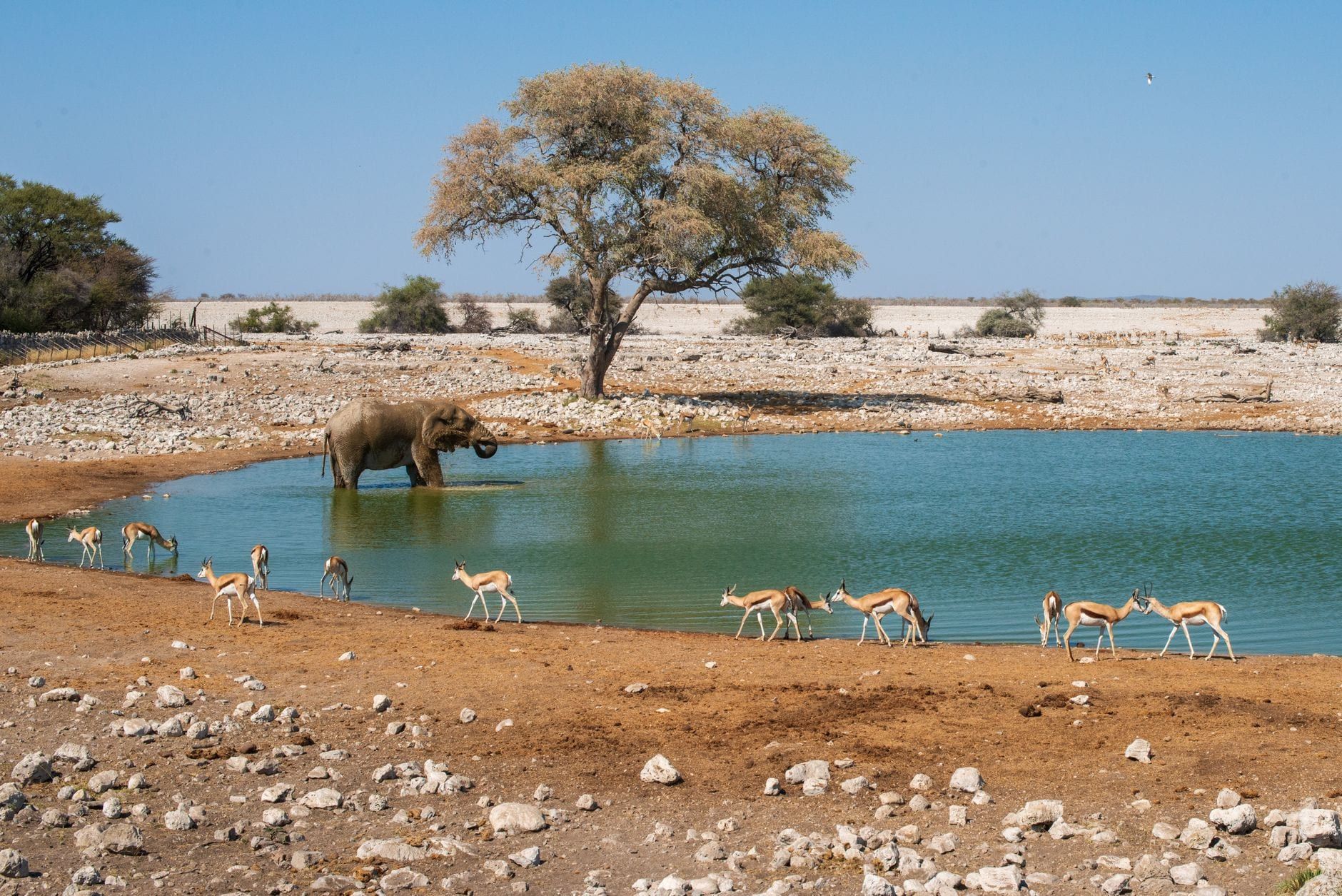
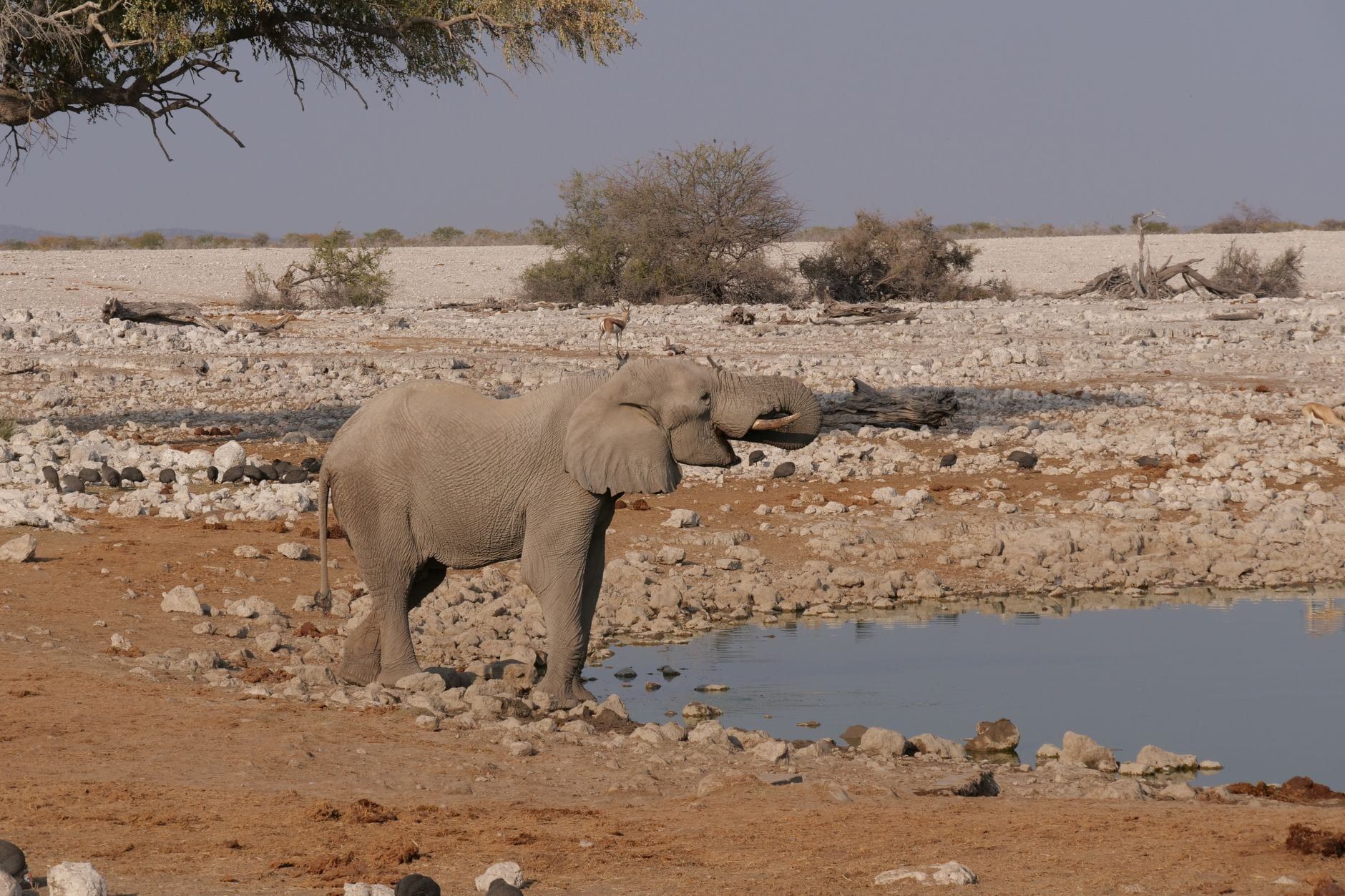
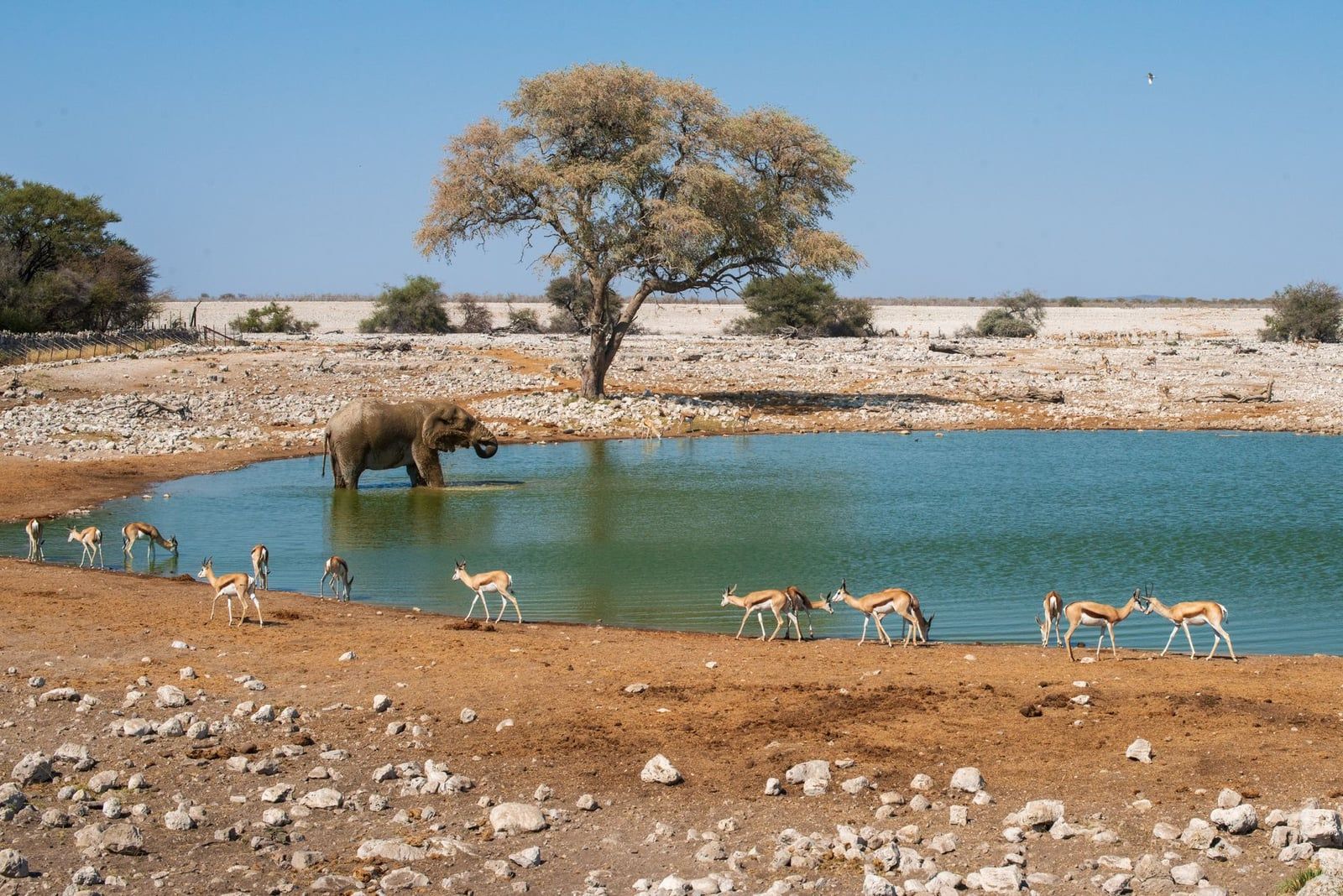
Etosha delivers Africa's most predictable wildlife viewing from the driver's seat of your own rental car. The park sits in northern Namibia, about 420 km north of Windhoek — not Tanzania, a mix-up that surfaces in searches often enough to be worth killing here — and it runs on one simple mechanic. For seven to nine months of the year there is almost no standing water, so roughly 86 waterholes draw the game in, and you just have to be parked at the right one at the right time.
That mechanic is why first-time safari-goers leave Etosha with better sightings than many veterans get in denser parks. This guide walks the decisions that shape the trip — self-drive or guided, which months, which camp, how many days, what it costs — with numbers rather than adjectives. For background on the park's history and highlights, we cover that separately.
Why an Etosha Safari Is Different
Almost 23,000 km² of savanna surrounds the Etosha Pan — a 4,730 km² salt flat, the largest in Africa, visible from space. The name means "great white place" in the local language, and the pan is exactly what you see when you stand at its edge near Namutoni: a blinding white floor 130 km long, shimmering with heat mirages that make it look flooded even in drought. Game avoids the sterile pan itself. Everything lives on the ring of grassland and mopane shrub around it, within reach of the waterholes.
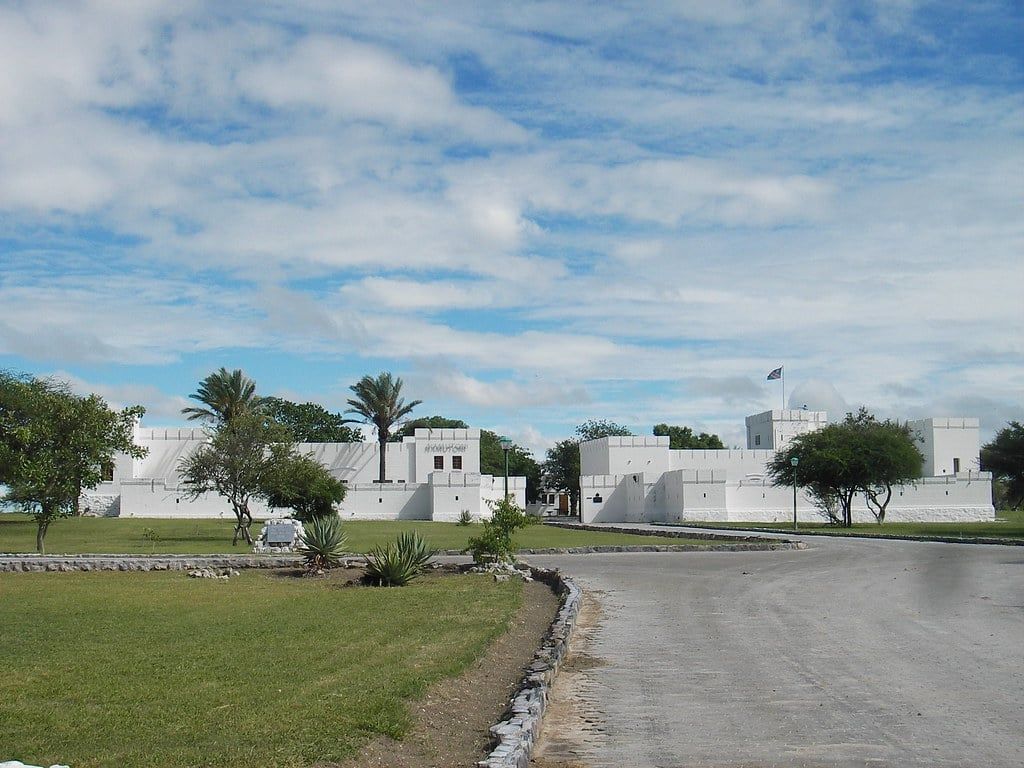
Governor Friedrich von Lindequist proclaimed the area a game reserve in March 1907, making it one of Africa's oldest protected areas; the German fort at Namutoni still stands from the colonial era that created it. The conservation story since then is concrete: 26 elephants were counted in 1954, and boreholes drilled to draw wildlife back built today's population of more than 2,500. Etosha's black-rhino recovery later seeded Namibia's Rhino Custodianship programme.
For a visitor, all of this resolves into something rare: a big-five-class park you can work yourself. Waterholes are numbered and signposted, roads are a well-graded gravel grid, and you watch everything from your car. No tracker, no radio network, no package required — though there are good reasons to book one anyway, which we'll get to.
Self-Drive or Guided? How Your Safari Actually Works
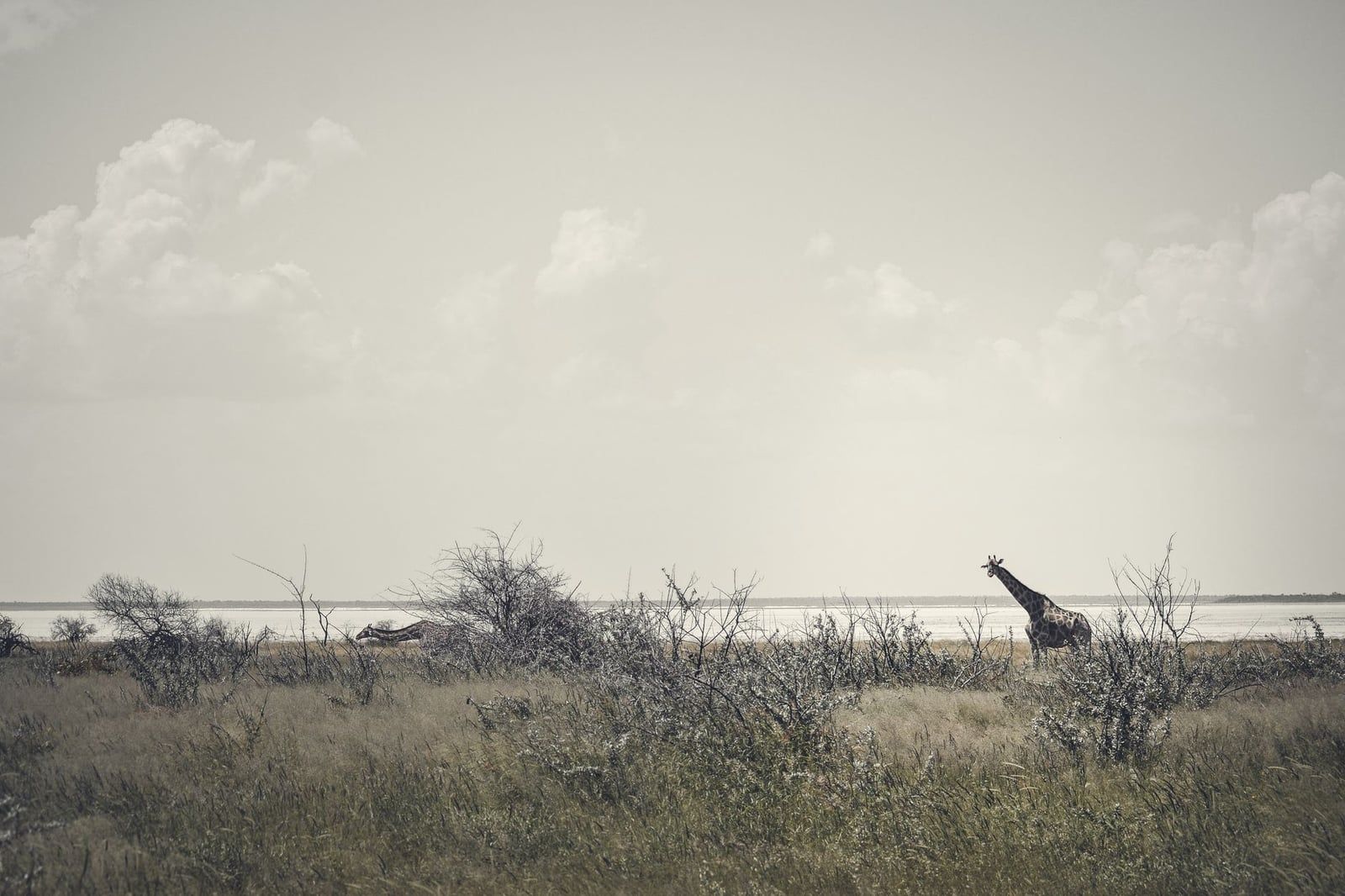
Most Etosha visitors self-drive, and the park is built for it. Only the 17 km from Andersson Gate to Okaukuejo is tarred; the rest of the 3,500 km tourist network is gravel, well-graded and signposted, with a 60 km/h limit. Waterhole-based viewing means you're not hunting through thick bush for a glimpse — you drive to a numbered point and wait. A sedan manages the main dry-season roads; a high-clearance SUV is more comfortable over the corrugations, and a 4x4 earns its keep in the western section or after rain.
Guided drives are the other half of the picture. An open-vehicle game drive from one of the main camps costs about NAD 1,200–1,800 (USD 70–95) per seat for a half day, and a good guide reads tracks, radio chatter and light in ways a first-timer can't. Camp-run night drives are also the only legal way to be out after the gates close, when lions and rhino are most active. A 4x4 with rooftop tent rents for NAD 1,500–2,500 per day — less than two guided seats.
| Self-drive | Guided game drive | |
|---|---|---|
| Cost for two people | Rental NAD 1,500–2,500/day split across the car, plus gate fees | NAD 1,200–1,800 (USD 70–95) per seat per half-day |
| Vehicle | Your own rental; a 2WD suffices on dry main roads | Open 4x4 with a tracker-guide who reads tracks and radio calls |
| After-dark viewing | Only from the floodlit waterholes at the rest camps | Camp night drives are the only legal option after dark |
| Skill needed | Gravel-road confidence and self-navigation | None — you just show up and look |
| Best for | Budget travellers, repeat visitors, photographers wanting control | First-timers, non-drivers, anyone nervous of gravel |
A practical split: self-drive the daytime circuits and add one guided night drive from your camp. You keep the freedom and the low cost, and you buy the one thing your own car can't do — being out with a spotlight at 21:00 when the rhino come in. If you'd rather not drive Namibia at all, guided safari tours that bundle transport, drives and accommodation exist for exactly that.
When to Go: Season, Month, and Time of Day
May to October is the dry season, and it's when the waterhole mechanic works hardest. As pans and seasonal rivers dry out, game funnels toward the permanent holes and sightings become almost scheduled. July through September is the peak — specialist ratings score those months highest — and by late September into October the concentration peaks, with 50-strong elephant gatherings routine. Those months also bring the crowds and the fullest camps, so book early for late June through mid-October. Days run 21–29°C, with nights near freezing June–August.
November to April flips the park. Rain — heaviest January to March — scatters wildlife across 22,000 km² of suddenly green grazing, and viewing gets hard work. The trade: newborn animals, summer migrant birds, dramatic skies and low lodge rates, with daytime temperatures often past 32°C. March to May is the underrated middle — the landscape is still green, game is returning to permanent water, and camp rates sit 25–40% below peak. For a deeper month-by-month breakdown, see our guide to the best time to visit Etosha.
The daily rhythm matters as much as the month. Enter at gate opening — sunrise — when predators are still moving, then work the central waterholes before 09:00. Etosha's quirk is that midday viewing still works in the dry season: animals have to drink all day, so holes like Chudob and Ombika keep producing through the heat. Activity picks up again from late afternoon, and after dark the camp floodlit waterholes take over. You cannot drive yourself at night, but you don't need to — the benches at Okaukuejo's waterhole often beat the day's driving.
Getting There, Gates, and Entrance Fees
The standard approach is self-drive from Windhoek: B1 north through Otjiwarongo and Outjo, then the C38 to Andersson Gate, roughly 420–435 km and 4.5–6 hours with stops. From Swakopmund it's about 492 km, around 5 hours, usually combined with a Skeleton Coast or Damaraland route. If you'd rather not drive at all, a private transfer runs around NAD 5,500 one-way for one or two people, and FlyNamibia flies Windhoek's Eros Airport to Ondangwa in under an hour (from about US$185 one-way), from where the King Nehale gate is 48 km off the main road. Full transport options are in our guide to getting to Etosha.
Four gates serve four itineraries. Andersson Gate in the south is 17 km from Okaukuejo and suits the classic route from Windhoek. Von Lindequist Gate in the east lies 8 km from Namutoni, near the supply town of Tsumeb — enter here if you're driving down from the Caprivi. Galton Gate serves the restricted south-west and Dolomite Camp. King Nehale opens the north from Ondangwa. Entering one gate and exiting another is allowed and normal; pick the pair that matches your route.
Gates open at sunrise and close at sunset, and the exact times shift weekly with the daylight — 06:55–18:50 in early September, 06:10–19:25 in early December. Times are posted at every gate; confirm at camp reception each day rather than trusting yesterday's printout. Miss closing and you risk a fine or a night locked out, and hitting an elephant at dusk is a real possibility.
Fees: until 31 March 2026 a foreign adult pays NAD 150 per day plus NAD 50 per vehicle (up to 10 seats), with SADC adults at NAD 100, Namibians NAD 50 and children under 16 free. From 1 April 2026 the official schedule raises the foreign adult rate to NAD 280 and the vehicle fee to NAD 60. Several guides still ranking on Google quote the old N$150 figure as current — verify before you travel, carry your passport for the mandatory ID check, and bring cash as backup. We track current hours and fees here.
The Wildlife: What You'll See (and What You Won't)
Be honest with yourself about the odds before you go. Etosha's ledger runs 114 mammal species and more than 400 recorded birds, but the headline animals split cleanly into near-certainties and luck.
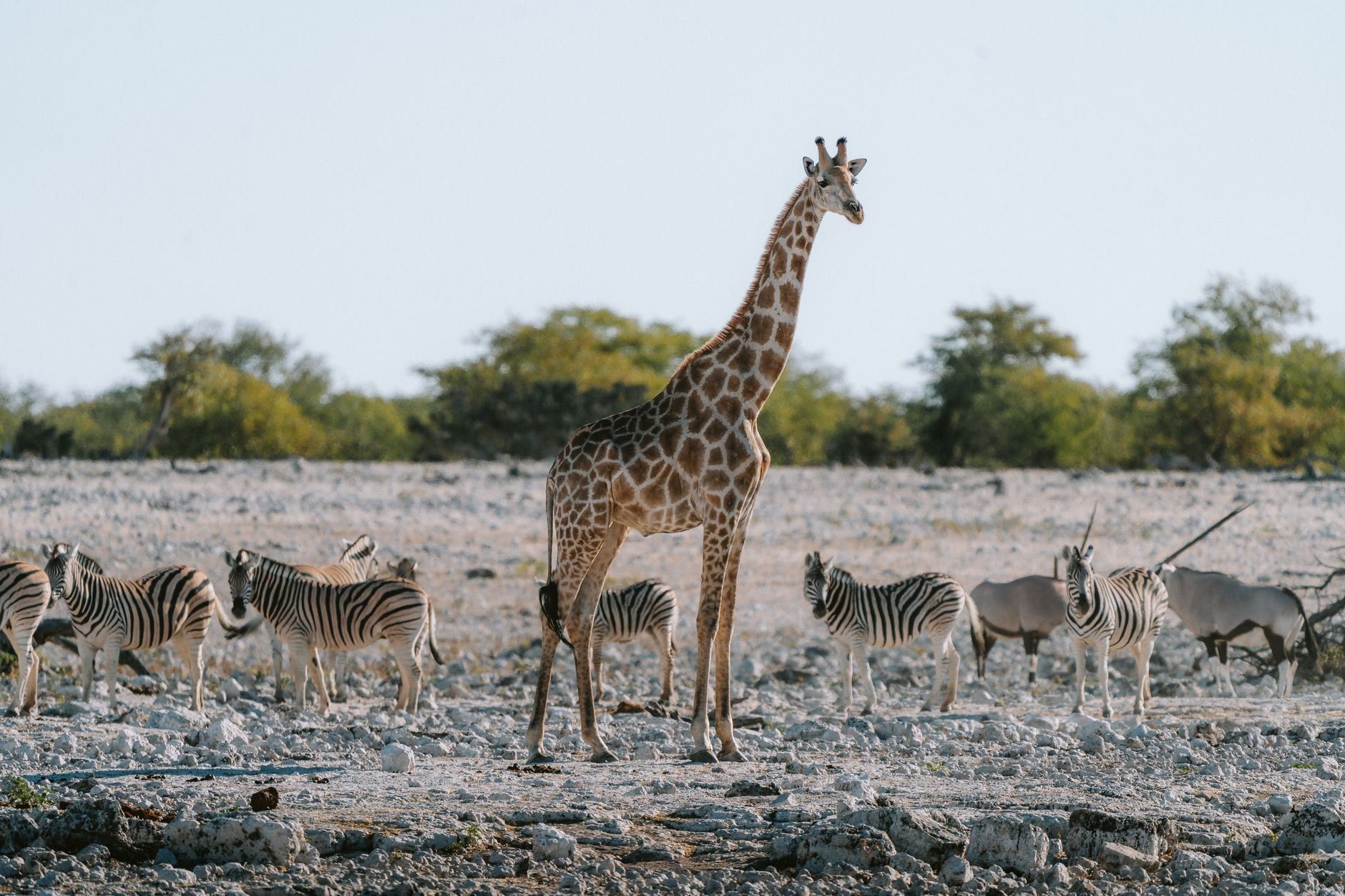
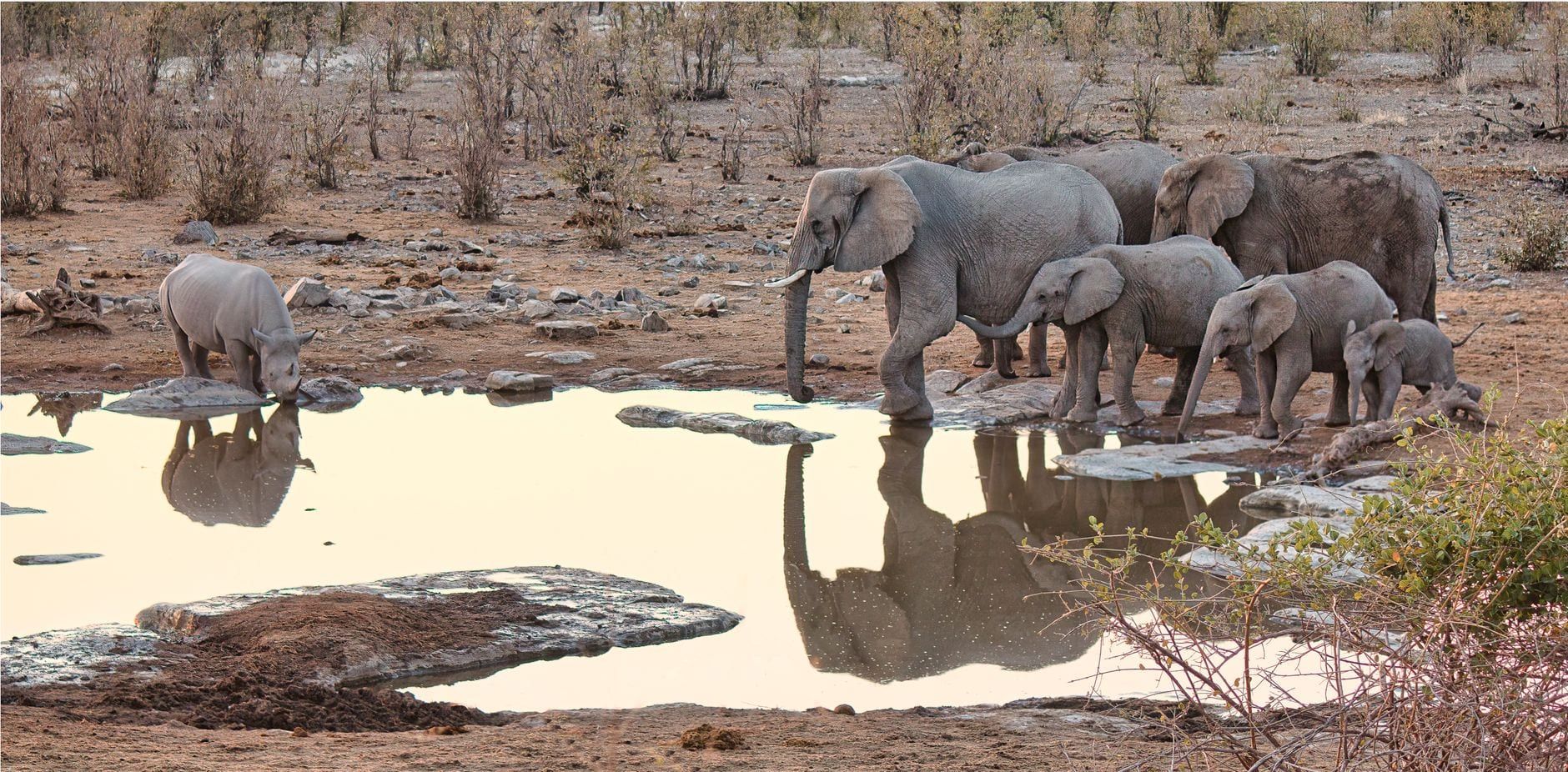
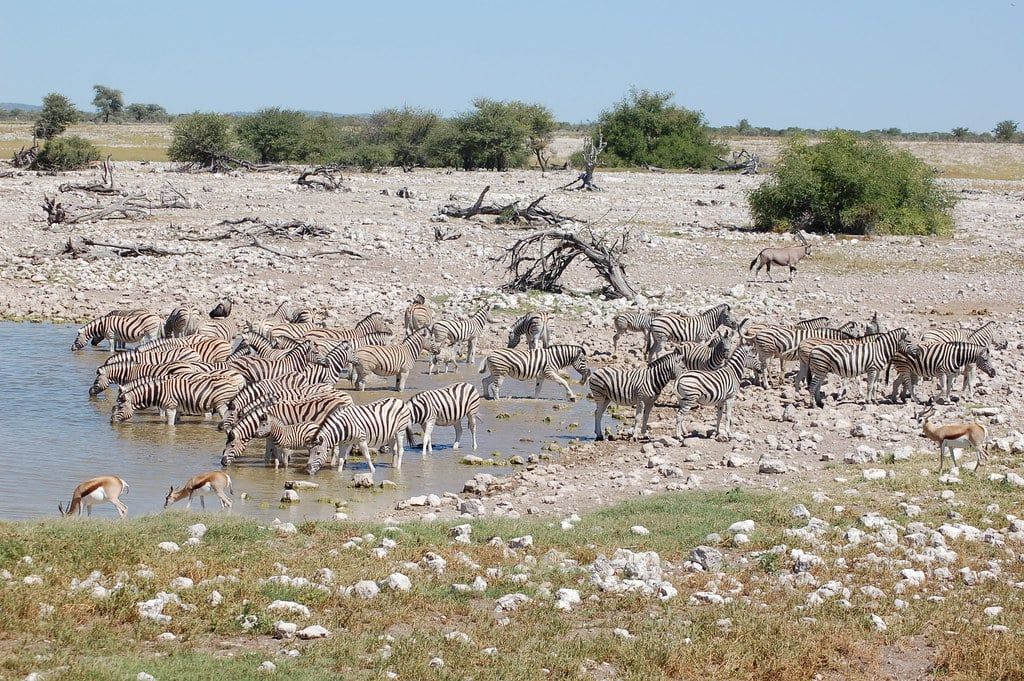
Zebra, springbok, wildebeest, giraffe and oryx are guaranteed — you'll pass hundreds before lunch, and by day three you'll stop photographing them. Elephants are close to guaranteed too: the park holds more than 2,500, and in September and October dry-season gatherings of 50-plus animals at a single waterhole are routine. They're distinctive, dusted white with Etosha's pale clay, and often called the "white ghosts". See our full guide to Etosha's animals for the rest of the cast.
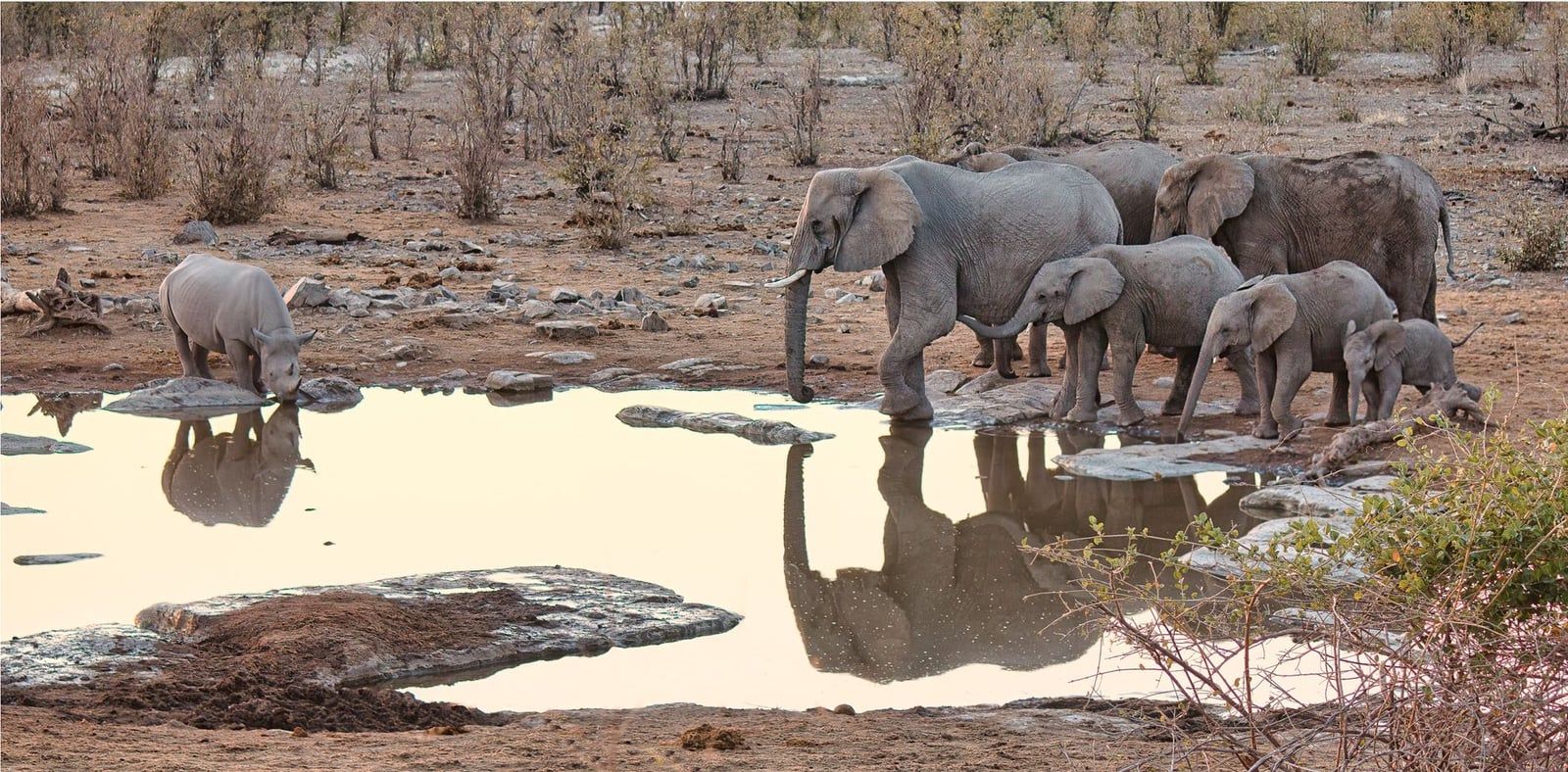
Black rhino are Etosha's signature, and the numbers are startling: 500-plus south-western black rhino, the largest single-reserve population on Earth and roughly a third of the subspecies' wild numbers. The exact count is kept secret for protection. Midday is the wrong time to look — rhino drink at night, and the floodlit camp waterholes between about 19:00 and 23:00 are where you'll see them, sometimes metres from your chair.
Lions are a good bet across a stay: 300–400 animals in 25–30 prides, drinking at dawn and dozing in the shade of waterhole thorn trees through the day. Leopards are a genuine matter of luck — the thickets around Halali and Fischer's Pan are their country, and many visitors never see one. Cheetah favour the open plains around Gemsbokvlakte and Charitsaub. And the absent fifth: Cape buffalo aren't in Etosha, kept out deliberately because Namibia protects its foot-and-mouth-free livestock status. Four of the Big 5 is what's on offer.
Two mammals occur essentially nowhere else. The black-faced impala — around 200 were relocated to Etosha in the early 1970s to save the species — lives in the western dolomite hills, and the tiny Damara dik-dik hides in dense eastern thickets. Birders should note 340 resident and migratory species, and that a wet-season flood on the pan brings flamingos and pelicans in numbers.
The Waterhole Strategy: Where and When to Find Animals
The method is simple, and it works: drive the loop between waterholes, park at one that looks busy, cut the engine, and wait. Parked cars are the park's real-time intelligence — three vehicles clustered at a blind corner means something is there. Posture matters more than pace; an hour sitting still at one good hole beats racing the whole circuit.
The named holes earn their reputations. Lions drink at first and last light, cheetah work the open plains in the morning, leopards keep to cover, elephants come from midday onward, and rhino own the night. This table is the cheat-sheet:
| You're looking for | Go to | When |
|---|---|---|
| Lions | Okondeka, Rietfontein, Groot Okevi | Dawn and the last hour of light |
| Cheetahs | Gemsbokvlakte, Charitsaub, Leeubron, Twee Palms road | Morning, on the open plains |
| Leopards | Halali/Goas area, Fischer's Pan | Dawn and dusk — luck required |
| Elephants | Rietfontein, Nebrownii, Goas, Ozonjuitji m'Bari | Midday onward; Sep–Oct for big herds |
| Black rhino | Floodlit holes at Okaukuejo, Halali (Moringa), Namutoni | 19:00–23:00, dry season |
| Anything, reliably | Chudob, Ombika, Sonderkop, Groot Okevi | Midday in the dry season |
After dark, the floodlit waterholes take over, and Okaukuejo's is the best of the three — an elevated stone enclosure where rhino, elephant, lion and hyena drink within metres of the benches, lit against the dust. Halali's Moringa waterhole runs it close. Check the sighting boards at camp receptions each morning for what came in overnight, and keep quiet at the holes: noise empties them faster than anything.
Where to Stay: In-Park Camps vs Outside Lodges
The sharpest contradiction in Etosha advice is where to sleep, and both camps have a point. Staying inside buys you dawn access — you're past the gate queue at opening, when predators move — and the floodlit waterholes after dark, which is half the point of the park. Staying outside buys comfort and service: the private lodges ringing the gates deliver better food, guiding and rooms than the state-run camps, and some days that matters more.
Our call: first-timers stay inside, at least for the nights that count, because night viewing at Okaukuejo is the single best game experience in the park. Repeat visitors and comfort-seekers do well outside. Six rest camps sit inside the park, all run by Namibia Wildlife Resorts:
- Okaukuejo — park headquarters, the famous floodlit waterhole; the first-timer's pick
- Halali — central hilltop camp with the Moringa waterhole, in leopard country
- Namutoni — restored German fort; base for the east and Fischer's Pan birding
- Onkoshi — small, solar-powered, on the pan's edge; book very far ahead
- Dolomite — luxury tents opening the restricted west; best odds at black-faced impala
- Olifantsrus — camping only, quiet and cheap
Prices split into three tiers: campsites at NAD 400–650 a pitch, standard chalets NAD 1,900–3,400, and waterhole-view chalets NAD 3,400–5,200 in peak. Waterhole-view rooms at Okaukuejo and Halali sell out 9–12 months ahead for July–November — set a booking reminder or accept a standard room and use the benches. Private lodges just outside the gates (Ongava and Onguma are the names to know) run NAD 6,500–18,000 per person sharing, and bundle guided walks and night drives on their own land, which the national park doesn't allow. More detail in our Etosha accommodation guide.
How Many Days You Need (and the Classic Route)
Two nights is the workable minimum; three to four is ideal. One night means a single waterhole circuit and no sense of the park's zones. With three nights you can sleep at a different camp each night and see Etosha as three different countries: the west's rhino-and-lion dolomite hills, the central mopane where elephant and leopard live, and the eastern grasslands built for cheetah and birding.
The classic traverse runs Andersson Gate → Okaukuejo → Halali → Namutoni → Von Lindequist Gate, or the reverse if you're driving from the east. Distances are manageable: Andersson Gate to Okaukuejo is 17 km, Okaukuejo to Halali 56 km (about 1.5 hours with game stops), Halali to Namutoni 75 km (also about 1.5 hours), and Von Lindequist Gate just 8 km beyond Namutoni. The outlier is Dolomite Camp, 173 km and four hours from Okaukuejo without stops — worth it for the west, but budget a full day. A full day inside the park covers roughly 300–400 km of driving.
If you genuinely only have one day, do it properly: enter at dawn at Andersson, work Gemsbokvlakte and Charitsaub through the morning, take a midday break at Halali's waterhole and restaurant, loop east through Goas and Fischer's Pan in the afternoon, and exit at Von Lindequist before closing. It's a full but rewarding day — base yourself near a gate the night before, because the drive from Windhoek plus a park day in one push is too much.
Rules, Safety, and Practical Essentials
The rules are non-negotiable and rangers enforce them. Stay in your vehicle except inside camps and at fenced rest sites. The limit is 60 km/h — drop to 20–40 km/h near animals. No off-road driving (violations risk vehicle impoundment), no driving on the pan, no drones (declare any drone at the gate; it's stored until you leave), no night driving, and be behind a camp fence by closing time. Namibia also bans plastic bags nationwide. Wild animals are the genuine hazard here: animals appear beside the road without warning, and the 60 km/h limit exists because zebra dart.
Fuel is sold only at Okaukuejo, Halali and Namutoni, the stations sometimes run dry, and they don't take cards — carry cash, fill up at Outjo or Tsumeb before entry, and top up at every opportunity. Punctures on the corruged gravel are near-routine; check your spare before the gate. The same three camps hold the only restaurants and shops, and camp shops sell little beyond snacks, so buy picnic supplies in town. Eating is allowed only inside fenced rest sites.
- Binoculars — much of the action happens far across open plains
- A 300mm-plus lens; the floodlit holes reward fast glass
- Layers: near-freezing June–August nights, hot afternoons
- A torch and a Type M plug adapter
Health and connectivity, briefly. Etosha is a low-to-moderate malaria zone: risk is slight May–October and higher November–April around the pan margins, so see a travel clinic about prophylaxis and use repellent at dawn and dusk either way. Mobile signal inside the park is patchy, camps sell paid wifi, and the official park app and offline maps work without it — download them before you lose service.
What an Etosha Safari Costs
Here's the arithmetic for a sample couple: two adults, a rented 4x4, three days in the park, at the post-April-2026 rates. Gate fees run 2 × NAD 280 × 3 days for the adults plus NAD 60 × 3 for the vehicle — about NAD 1,860 total. The 4x4 at NAD 1,500–2,500 a day adds NAD 4,500–7,500 for the park days themselves (count the Windhoek transit days on top). Fuel at roughly NAD 22 a litre, with 300–400 km of in-park driving a day plus the 850 km round trip from Windhoek, runs to several thousand more. Food is camp-restaurant pricing unless you self-cater from a rooftop tent.
Set that against guided seats: NAD 1,200–1,800 per person per half-day drive means a couple spending on two seats a day pays NAD 2,400–3,600 — more than the entire rental — before adding their accommodation or how they got to the park. That's the core argument for self-driving, and why the 4x4-with-tent crowd keeps coming back. For reference, one independent traveller documented a camping-based floor of about USD 230 a day all-in; dry-season accommodation prices run 20–40% above low season.
Where to spend: put your money on one night in a waterhole-view chalet at Okaukuejo — NAD 3,400–5,200, and it puts the night game at the end of your bed — and camp or take standard rooms elsewhere. Where to save: the March–May shoulder cuts accommodation 25–40% with the game already returning to permanent water. If the DIY arithmetic still looks like work, compare Etosha tours that bundle the whole thing at a fixed price.
Frequently asked questions
How many days do you need for an Etosha safari?
Two full days is the realistic minimum; 3–4 days is ideal, sleeping at a different camp each night. The classic route is Okaukuejo → Halali → Namutoni over three nights, entering at Andersson Gate and exiting at Von Lindequist.
Can you self-drive in Etosha, and do you need a 4x4?
Yes — it's one of Africa's most self-drive-friendly parks, with signposted graded-gravel roads linking the waterholes. A 2WD manages the main roads in dry season; take a high-clearance or 4x4 vehicle for comfort, for the western section, or in wet months.
How much does an Etosha safari cost?
Entry is NAD 150 per foreign adult per day plus NAD 50 per vehicle until 31 March 2026, rising to NAD 280 and NAD 60 from 1 April. Add a 4x4 rental at NAD 1,500–2,500/day, in-park chalets at NAD 1,900–5,200/night, or guided drives at NAD 1,200–1,800 per seat.
Will I see the Big Five in Etosha?
Four of them: lion, elephant, leopard and black rhino. Cape buffalo are absent because Namibia keeps them out to protect its foot-and-mouth-free livestock industry. The 500-plus black rhino are the world's largest single-reserve population.
Which Etosha camp should I book?
Okaukuejo for first-timers — its floodlit waterhole delivers nightly rhino, elephant and lion sightings, though waterhole-view chalets book out 9–12 months ahead. Halali is the quieter central pick; Namutoni suits birders and the eastern section.
Do you need malaria tablets for Etosha?
Etosha is a low-to-moderate malaria zone. Risk is slight in the dry May–October season and higher November–April near the pan margins. Prophylaxis is commonly advised for wet-season visits — ask a travel-medicine clinic, not a forum.
Can you combine Etosha with Sossusvlei in one trip?
Yes — it's the classic Namibian itinerary. Allow 10–14 days minimum, with roughly two driving days between the two, usually broken at Swakopmund and Damaraland.
Is it safe to self-drive in Etosha?
Yes. Namibia is among Africa's safest countries and the park is well managed. The real risks are gravel-road punctures and driving after dark — stay in your vehicle, keep to 60 km/h, and be behind a camp fence before gate closing.