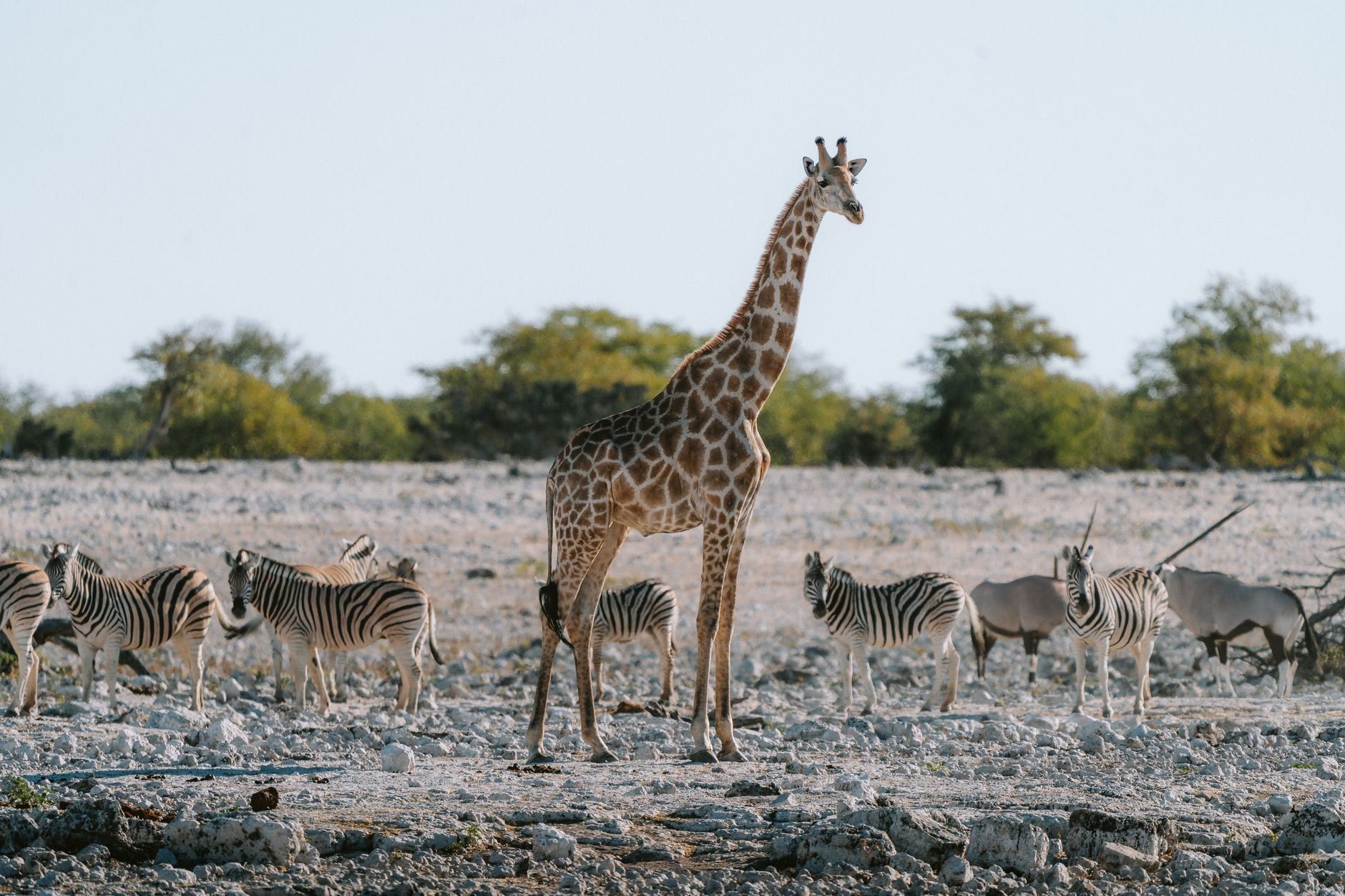
Etosha gives you exactly two kinds of bed: six government-run camps inside the park gates, and dozens of privately owned lodges clustered around them outside. That's the whole menu. Namibia Wildlife Resorts (NWR) holds the monopoly inside, from N$510 campsites to N$3,180 hilltop tents, while outside, family-run lodges, two private game reserves and farm-style campsites ring the four gates at Andersson, Von Lindequist, King Nehale and Galton.
Where you sleep decides what your safari looks like. Sleep inside and you can watch black rhino drink under floodlights at midnight, ten minutes' walk from your chalet. Sleep outside and you get a proper mattress, a pool and a chef — but the gates close at sunset and your dawn drive starts an hour later. This guide compares both sides camp by camp and gate by gate, with current rates, and finishes with booking tactics for the nights you actually want.
Etosha Accommodation at a Glance
Namibia Wildlife Resorts runs every bed inside the fence: Okaukuejo, Halali and Namutoni through the centre and east, Dolomite and Olifantsrus in the west, and Onkoshi on the edge of the salt pan. Six properties for a 22,935 km² park that pulls around 200,000 visitors a year. That ratio is why the inside camps book out far ahead and why the private-lodge scene outside the gates exists at all.
Your gate choice frames everything. Andersson Gate in the south is the workhorse — 420–435 km from Windhoek, a 4.5–6 hour drive on tar via Otjiwarongo and Outjo, with Okaukuejo just 17 km inside. Von Lindequist Gate in the east is about five hours from the capital and serves the Namutoni, Mushara and Onguma cluster. King Nehale Gate in the north is the quiet entrance, 48 km off the Ondangwa road. Galton Gate in the southwest is your way into the restricted western section. If you're still sorting out the drive, our tours from Windhoek and the route guide to Etosha cover the options.
Scarcity is the one number to hold in your head: inside accommodation goes 6–12 months ahead for the May–October dry season, and Okaukuejo's waterhole chalets are usually gone a full year out. Book first, plan the route second.
| Best for | Property | Why | From rate |
|---|---|---|---|
| Best waterhole stay | Okaukuejo (inside) | Floodlit waterhole; premium chalets overlook it | N$650 |
| Best budget | Olifantsrus (inside) | Camping only, with an excellent game hide | N$510 |
| Best luxury | Ongava Lodge / Onguma The Fort | Private reserves on the park boundary | Premium |
| Best for families | Etosha Village (2 km from Andersson) | 50 air-conditioned chalets, pool | Budget–mid |
| Best scenery | Dolomite Camp (west) | 20 tents on a hilltop in the dolomite hills | N$3,180 |
| Quietest option | King Nehale Lodge (north) | 1 km from the King Nehale gate, Andoni plains | Mid-range |
Inside or Outside the Park? The Decision That Shapes Your Safari
Gate times are the hinge of this decision. Gates open at sunrise and close at sunset, and the exact times shift week by week — 06:55–18:50 in early September, 06:15–19:00 in late October — posted at each gate and confirmed at camp reception. Stay outside and you must be through the gate by closing, which means handing back the last hour of evening light, the hour when cats start moving. Re-entry at sunrise costs you the first shift at the waterholes too. And every kilometre between your lodge and the gate is morning and evening game time lost: a lodge 2 km out forfeits minutes, one 26 km out forfeits most of an hour each way.
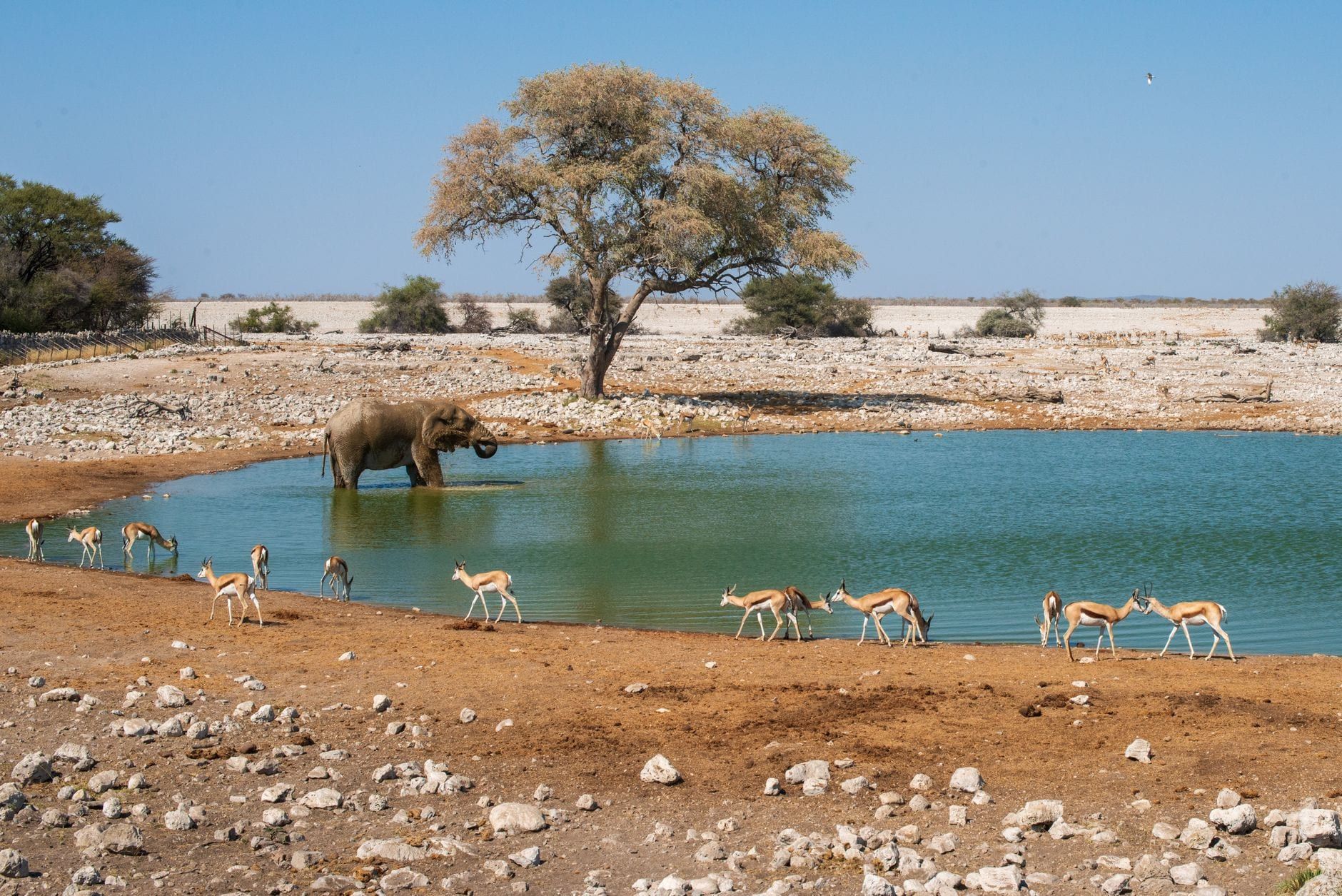
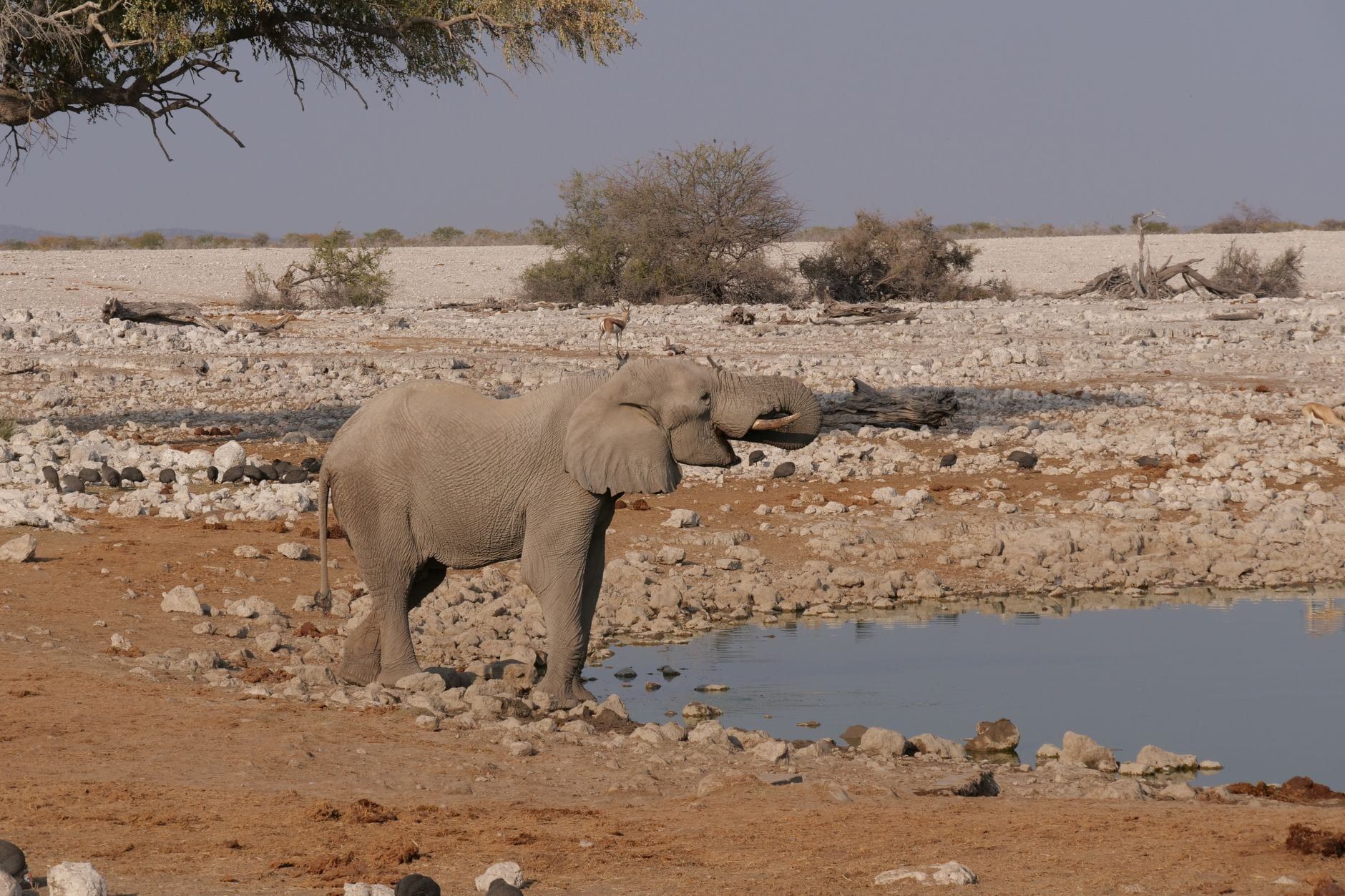
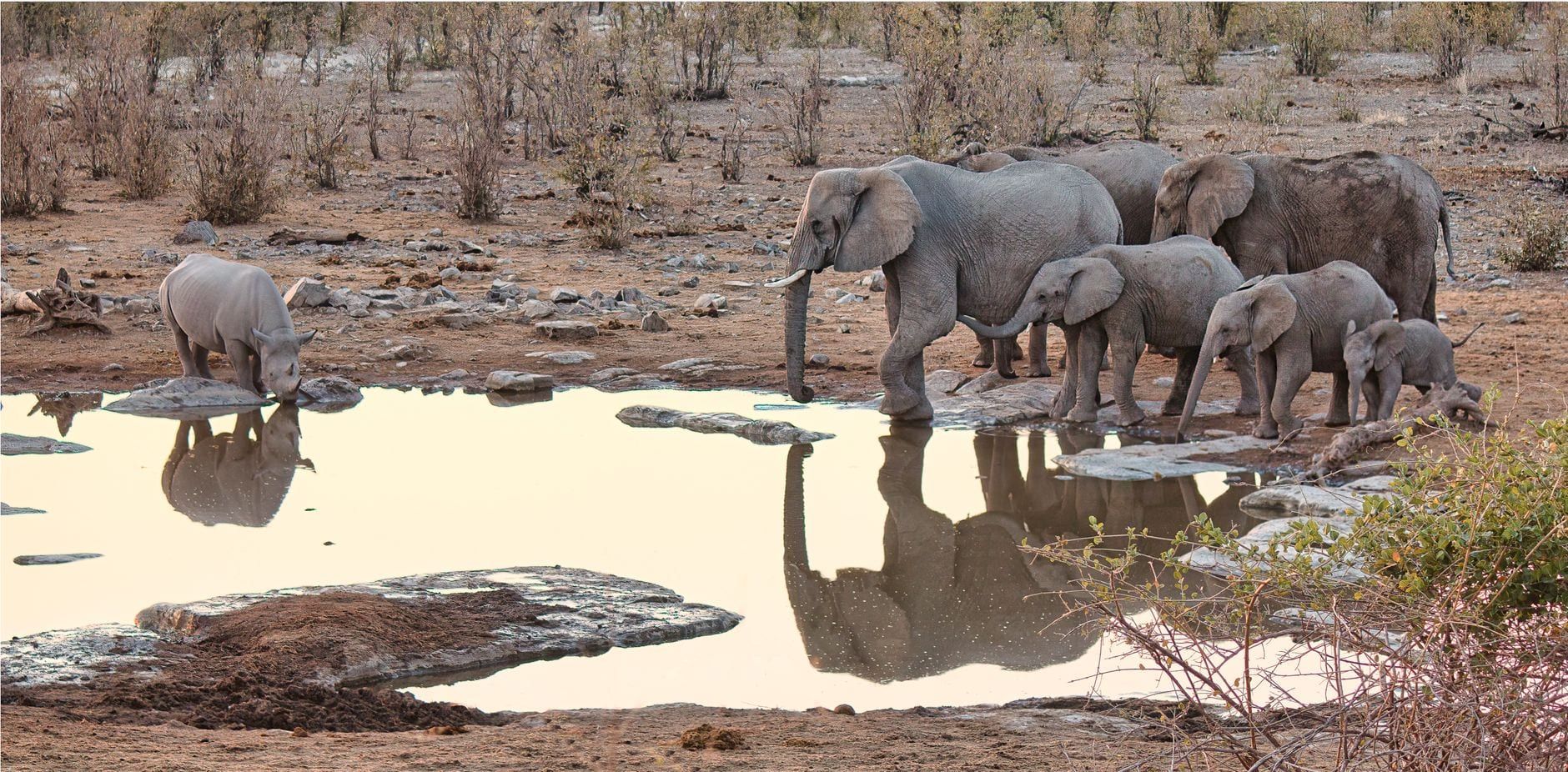
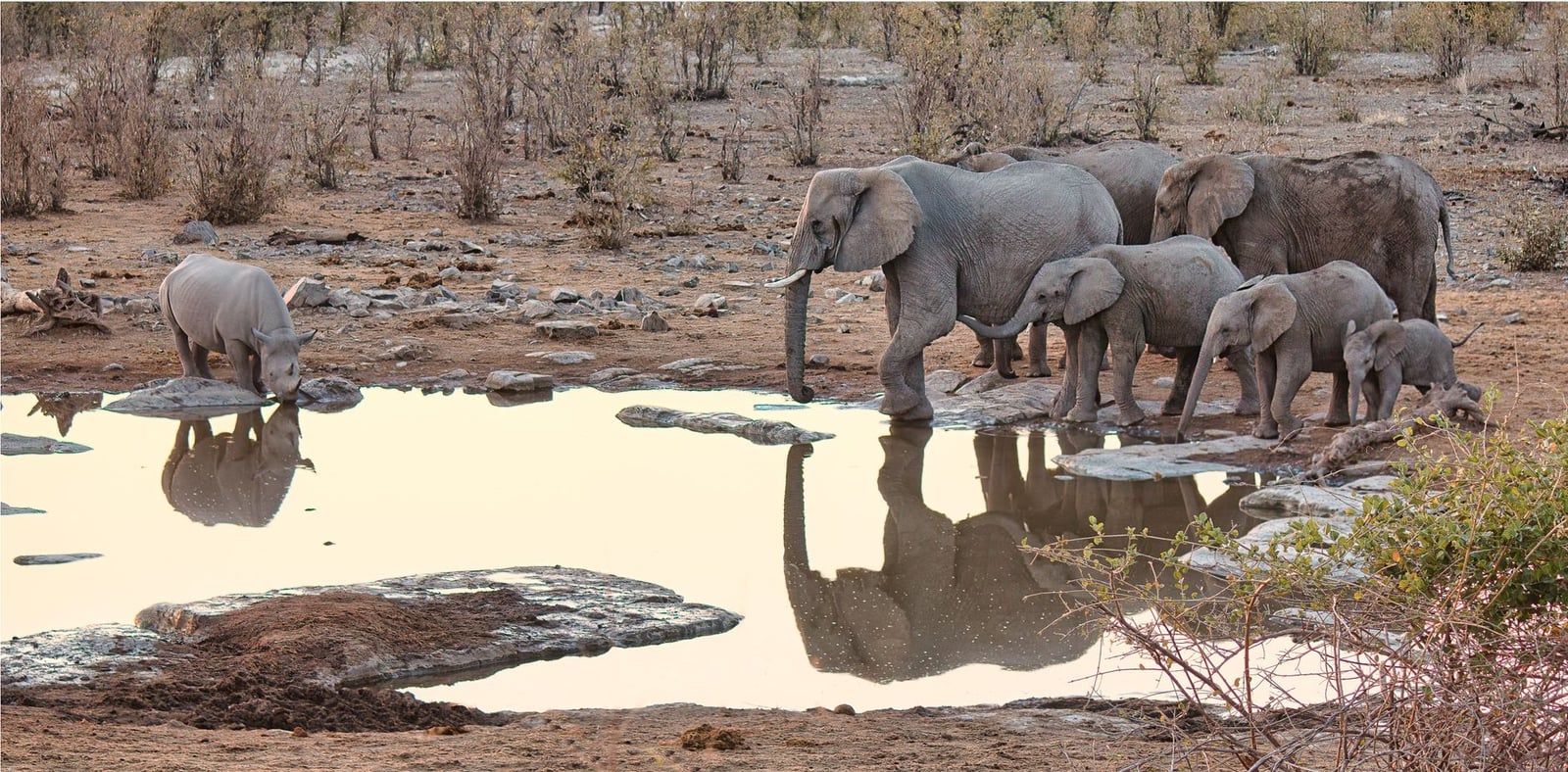
Inside, the floodlit waterholes at Okaukuejo, Halali and Namutoni keep working after dark. You sit on a bench with a drink and watch black rhino, elephant and lion come to drink under lights — Etosha holds the world's largest black rhino population, and the night waterholes are where you see them. Camp-run night drives (N$750 per person) are the only legal way to be on a park road after closing. Our guide to Etosha's animals goes deeper on what drinks where.
Comfort is where outside wins, and it isn't close. The government camps are functional: buffet restaurants, small shops, pools at the main three, rooms that range from spartan to pleasant. Private lodges run gourmet dining, better vehicles, guided bush walks and staff who remember your name. The inside camps are also busy — tour groups, school holidays, a queue at the buffet. A lodge on a private reserve is guest-only territory.
Cost cuts both ways. Camping inside is the cheapest bed in the region (N$460–560 per person in the 2026/27 season), while the top inside camp, Dolomite, runs around US$500 a night for two at peak. Budget lodges near Andersson can undercut NWR chalets; the private reserves cost more than everything. And remember park entry is separate from your bed: NAD 280 per foreign adult per day plus NAD 60 per vehicle from 1 April 2026, payable at the gate — the current fees and hours rundown keeps the detail.
Freedom favours inside. With your own vehicle you drive 3,551 km of gravel yourself, sit at a waterhole as long as you like and leave when you choose. On the private reserves you're guided — better spotting, walks, night drives, but on their schedule, not yours. If you've never driven a safari park before, the Etosha safari guide explains how a self-drive day actually works.
| NWR camps inside | Private lodges outside | |
|---|---|---|
| Dawn and dusk | On the road from sunrise to sunset | Exit by sunset, re-enter at sunrise |
| Night viewing | Floodlit waterholes at three camps | Night drives on private reserves only |
| Comfort and food | Basic chalets, buffet dining | Pools, gourmet kitchens, better service |
| Cost span | N$510 camping to ~US$500 at Dolomite | Budget lodges to premium reserve rates |
| How you see game | Self-drive your own vehicle | Guided drives, bush walks, night drives |
| Booking | NWR only, 6–12 months ahead | Direct or via agents, easier availability |
Most travellers land on a hybrid: one or two nights inside for the waterhole and the dawn access, then a night or two at a lodge outside for the bath, the food and the guided drives. It's the plan this article recommends unless you're camping the whole way.
The 6 Government Camps Inside Etosha — Compared (With Rates)
These are the six, in the order you'll meet them coming from the south, with NWR's published from-rates. Note what's missing at the small camps: fuel exists only at Okaukuejo, Halali and Namutoni, so fill up before heading west.
Okaukuejo
Seventeen kilometres from Andersson Gate, Etosha's first tourist camp (it opened in 1957) and still the reason people sleep inside. The floodlit waterhole here is the best in the park for night viewing — rhino, elephant and lion are regulars, and the benches fill accordingly. The premium waterhole chalets are double-storey units with upstairs balconies facing the water; they fit a large family and they're booked out roughly a year ahead. Facilities are the fullest in the park: fuel, shop, restaurant, pool, and two disabled-access rooms near the waterhole. Rooms from N$650; camping N$560 per person July–October 2026, dropping to N$460 from November to June 2027. The camp is busy and the campsites sit close together — that's the price of the waterhole.
Halali
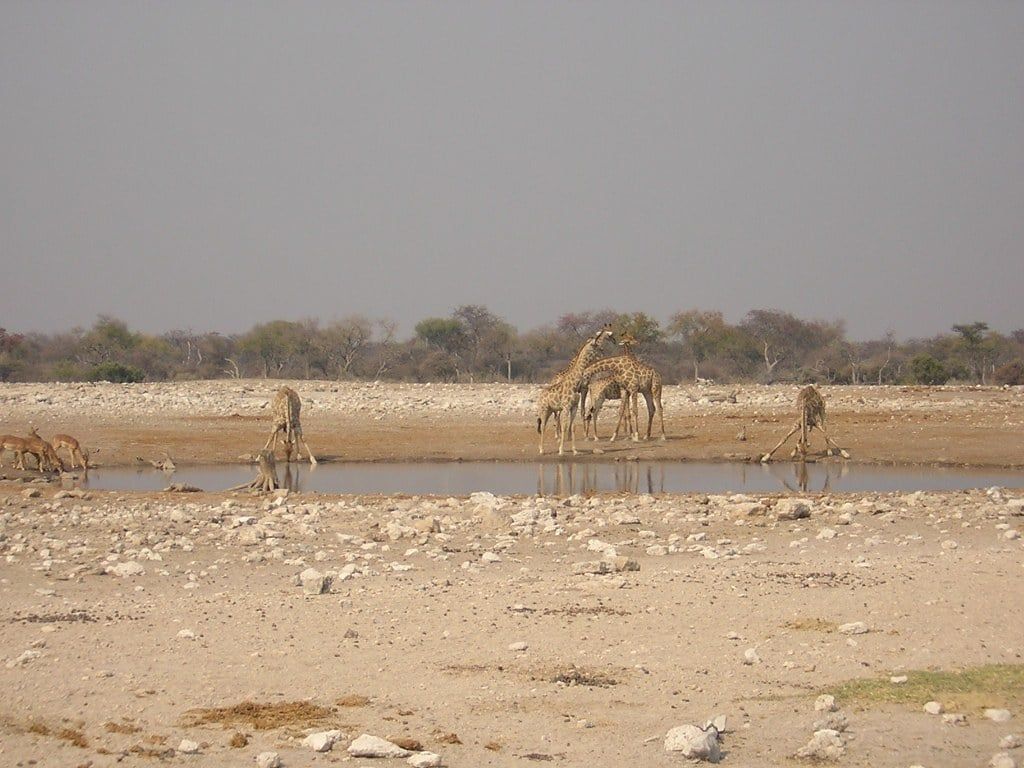
Midway between Okaukuejo and Namutoni, built on the park's only real hill and wrapped in mopane woodland that feels nothing like the open pans. It's the quiet insider's pick. The Moringa waterhole is floodlit and famous for black rhino, and the surrounding thicket is leopard country. Fuel, pool and restaurant on site, plus nature walks inside the camp fence — a rare chance to stretch your legs. Rooms from N$1,400. If Okaukuejo is full, book Halali without hesitation.
Namutoni
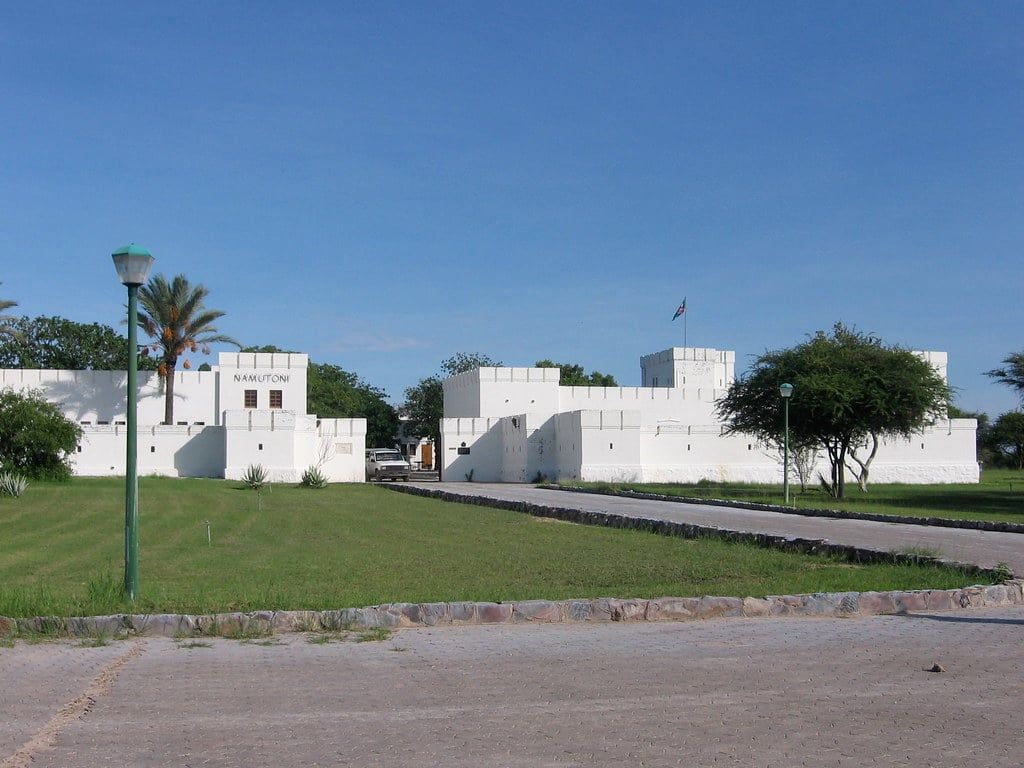
The eastern camp, a restored German fort near Von Lindequist Gate with lookout points and displays inside the old walls. It's the base for Fischer's Pan birding and the eastern grasslands, where springbok and zebra herds gather; the camp's own floodlit waterhole draws game after dark. Fuel, shop, restaurant and pool. Rooms from N$1,840. Pairs naturally with a final-night lodge at Mushara or Onguma on the way out.
Dolomite Camp
The camp that opened Etosha's previously restricted west: 20 permanent luxury tents on elevated decks in the dolomite hills, with the best sunrises and sunsets in the park and far fewer vehicles than the central circuit. The hills hold the park's strongest population of endemic black-faced impala. No fuel station, so arrive with a full tank from Okaukuejo — 130 km of gravel away. From N$3,180, which is roughly US$500 a night for two at peak. Service gets patchy reviews; you're paying for the location.
Onkoshi Camp
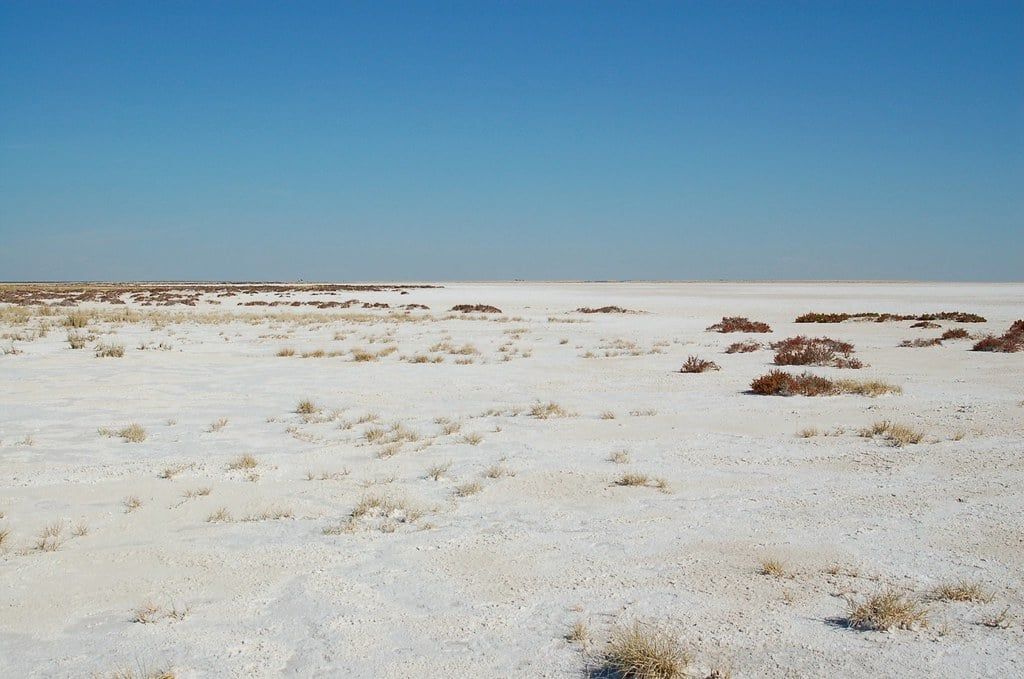
Fifteen low-impact eco chalets on the edge of the Etosha Pan, the most remote of the six and the only ones that face the great white expanse itself — 130 km long and visible from space. Access is by a road graded in 2017; there's no fuel and no shop to speak of. From N$3,180. Choose it for silence and the pan, not for facilities.
Olifantsrus
Camping only, and all the better for it. Olifantsrus sits in the remote northwest about 60 km from Galton Gate, with an elevated hide overlooking a waterhole that pulls elephant and black rhino — you can sit there for hours for the price of a campsite. No fuel, no restaurant, no chalets. From N$510 per person, the cheapest bed inside the park and, for many self-drivers, the best value in Namibia.
Camping at the NWR camps
Every camp except Onkoshi and Dolomite offers campsites with power points, braai facilities and communal ablutions, and all camps are fenced — you can sleep soundly, if not always silently. The sites at Okaukuejo and Halali are tightly spaced and book months out in high season anyway. Campers who want elbow room drive on to Olifantsrus, where the hide does double duty as your evening entertainment.
The short verdict: Okaukuejo for the waterhole, Halali for quiet and rhino, Namutoni to finish in the east, Dolomite if the west calls and budget allows, Olifantsrus if you're in a tent. With three nights or more, split between two of them — you'll cover two sectors without backtracking.
The Best Lodges & Campsites Outside the Park, Gate by Gate
Outside lodges only make sense relative to a gate, so plan them that way: pick your entrance, then your bed. Distances below are from the gate itself, and they're the difference between catching first light at a waterhole or arriving as the herds drift off.
Andersson Gate (south)
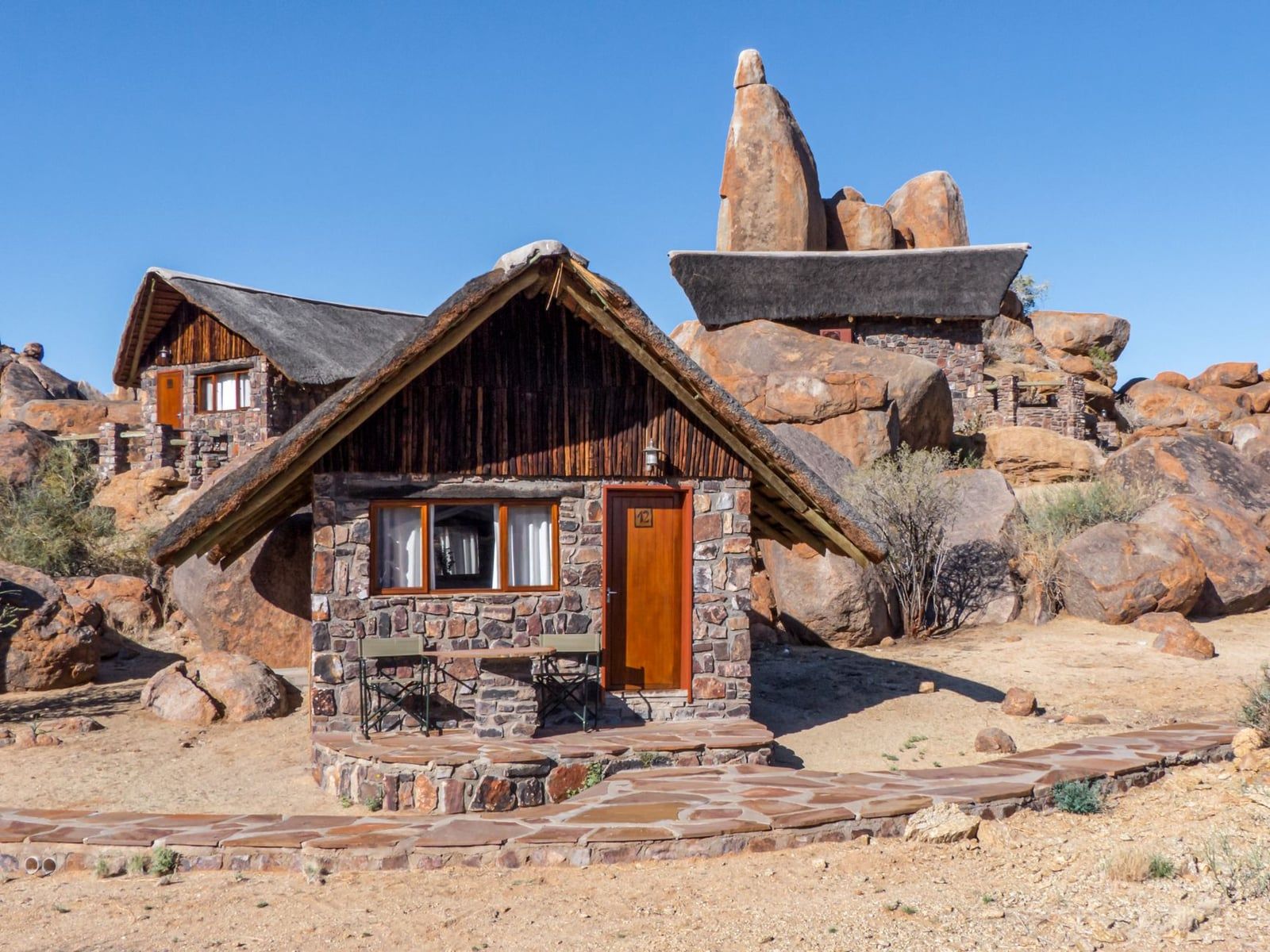
The deepest cluster, 4.5–6 hours from Windhoek. Etosha Village is the budget-and-family anchor: 50 air-conditioned chalets just 2 km from the gate, close enough that the sunrise queue costs you minutes. Etosha Trading Post, 6.5 km out, covers camping. Ten kilometres southeast you get Eldorado Lodge at the budget end, the Gondwana-run Etosha Safari Lodge and Etosha Safari Camp (with Camping2Go tents) in the mid-range, and Etosha Oberland at the top — 20 luxury tented chalets on a 5,500-hectare reserve sharing 10 km of border with the park. Toshari Lodge sits 26 km out, about 20 minutes' drive; fine rooms, but you feel the distance at dawn and dusk.
Ongava Private Game Reserve
Ongava runs along Andersson's flank with no fence between it and the national park — rhino and lion cross freely. Three properties (Ongava Lodge, Ongava Tented Camp and the small Little Ongava), a floodlit waterhole hide that gets photographers to eye level with visiting black rhino, guided walks and night drives, plus morning drives into Etosha itself. This is the place to sleep if you want big-game country without self-driving it.
Von Lindequist Gate (east)
The eastern cluster, about five hours from Windhoek and minutes from the supply town of Tsumeb. The Mushara Collection sits 8 km from the gate in four tiers — the main Lodge, the family-friendly Bush Camp, the upmarket Outpost and Villa Mushara for occasions. Next door, the Onguma reserve spreads across 34,000 hectares with Bush Camp, Forest Camp, Tented Camp and the fortress-style Onguma The Fort. Mokuti Etosha Lodge, with 114 hotel-style rooms and the best facilities of any property around the park, shares the eastern approach and its own airstrip. Base here for Fischer's Pan and the east.
King Nehale Gate (north)
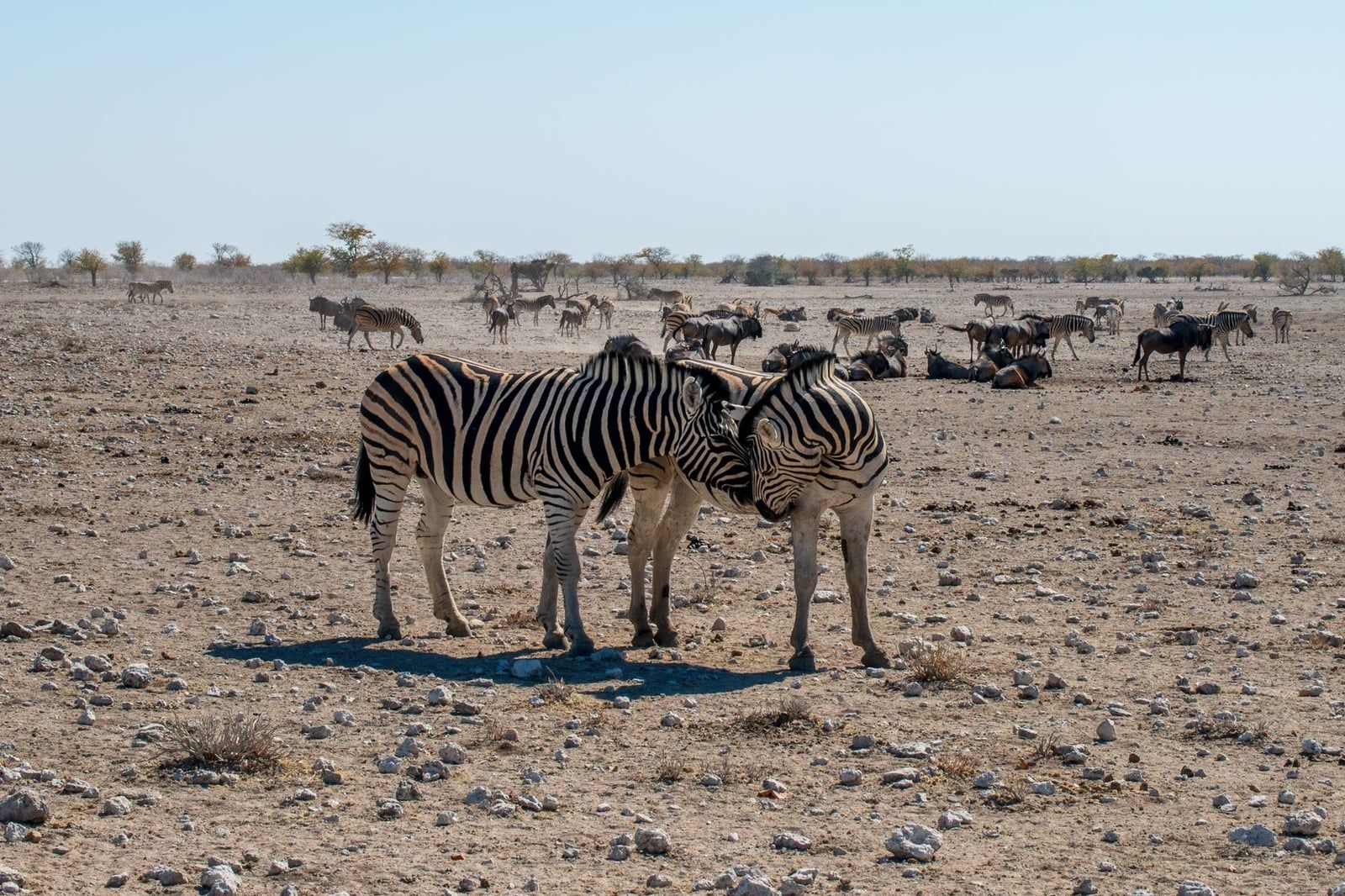
The option most guides skip. King Nehale Lodge stands about 1 km from the northern gate on the open Andoni plains, and the gate lies 48 km off the main Ondangwa road — which makes this cluster the natural choice if you fly into Ondangwa rather than drive from Windhoek. You trade lodge density for near-solitude at the gate; the plains around are where you'll have a waterhole to yourself.
Read the distances as time, not geography. A lodge 2 km from its gate puts you first in the queue at opening; 26 km means a 20-minute drive before you even badge in, and the same again after sunset warnings. In a park where the best hour is the first one, that matters more than the thread count.
How to Combine Your Stays: Plans by Trip Length and Traveler
Two days is the workable minimum in Etosha; three to four is the sweet spot, enough to cover the central and eastern sectors — or add the west — of a park that swallows countries. Here's how the options stack into actual plans.
Two nights
One night at Okaukuejo for the floodlit waterhole, one night at a lodge near Von Lindequist or Andersson for the comfort half. Enter at Andersson, work the central waterholes on the way in, sleep with the rhino, then finish east and exit through Von Lindequist. Tight, but you get both sides of the argument.
Three to four nights (the sweet spot)
Two nights at Okaukuejo — or one Okaukuejo plus one Halali to cover two sectors — then one or two nights at Onguma or a Mushara property with guided drives and a walk. The trick that makes this work: the drive between camps is the day's safari. Moving from Okaukuejo to Halali takes you past the best central waterholes anyway, so the transfer and the game drive are the same thing, with zero backtracking.
A camping circuit for self-drivers
In at Andersson, camp at Okaukuejo, then Halali or Namutoni, then exit east — or add Olifantsrus first if you're coming in via Galton and want the hide to yourself. Powered sites, braais and fenced camps make this a straightforward circuit in a rental 4x4; the corrugations between camps are the daily tax.
Families
The premium waterhole chalets at Okaukuejo are the room type that sleeps a whole family and books out about a year ahead, so decide early. For the lodge half, Mokuti Etosha and Etosha Village have the best family facilities — pools, space, and rooms that connect to how families actually travel. Note under-16s enter the park free, but camp game drives don't take children under six.
Honeymoons and special occasions
Skip the basic camps entirely and put the budget into Villa Mushara or Onguma The Fort, with maybe one waterhole night at Okaukuejo if you can get it. The private reserves give you the privacy, the dining and the guided walks that a honeymoon wants.
When and How to Book Etosha Accommodation
Start nine to twelve months out — that's the honest lead time for Namibia's dry season, and Etosha is the tightest piece of it. Okaukuejo's waterhole chalets go a full year ahead; the rest of the inside camps fill six or more months out for May–October. Private lodges also book early for those months, though they rarely match NWR's squeeze. The green season (November–April) is far easier — and a different trip entirely, with scattered game, newborn animals and migrant birds; our month-by-month guide helps you weigh that trade.
Booking NWR is its own small project. The online portal at nwr.com.na works but is awkward; the reliable alternative is an email enquiry listing your camps in order of preference with exact dates, sent early. Travel agents can book NWR too and will chase the follow-up for you. Whichever route you take, park entry is separate — paid at the gate, NAD 280 per foreign adult per day plus NAD 60 per vehicle from 1 April 2026.
If the inside camps show full, don't abandon the plan. Book a free-cancellation lodge outside your chosen gate as insurance, then keep re-checking NWR — cancellations surface throughout the year, and the properties near Andersson and Von Lindequist are plentiful enough to absorb a plan B. Release the backup the moment an inside bed appears.
Budget the extras before you commit to a rate card: daily entry fees for every person and vehicle for every day, plus guided drives if you want them — N$650 per person for morning or afternoon, N$750 for the night drive. A night at a camp and a night's fees are two different line items, and the fees now match the beds.
Frequently asked questions
Where is the best place to stay in Etosha National Park?
Okaukuejo, for its floodlit waterhole — the best night game viewing in the park, with rhino, elephant and lion drinking metres from camp. For pure comfort, the private lodges outside the gates win; most experienced travellers combine one or two nights inside with lodge nights outside.
Is it better to stay inside Etosha or at a lodge outside the park?
Inside gives you sunrise-to-sunset driving access plus 24-hour floodlit waterhole viewing, at the cost of basic rooms and crowds. Outside gives you comfort, dining and booking flexibility, but the gates cut your dawn and dusk window. The standard advice is to do a mix of both.
How far in advance should I book Etosha accommodation?
Nine to twelve months ahead for the May–October dry season. NWR camps inside can be full six months out, and Okaukuejo's waterhole chalets are usually gone a year in advance. Private lodges fill early for the same months.
How do I book the government camps inside Etosha?
Through Namibia Wildlife Resorts: the nwr.com.na portal, an email enquiry listing your preferred camps and dates, or a travel agent. The portal is widely reported as awkward, so email early and be specific.
Can you camp inside Etosha National Park?
Yes. All six NWR camps have campsites with power points, braai facilities and communal ablutions, and Olifantsrus is camping-only. Okaukuejo camping runs N$460–560 per person per night in the 2026/27 season. Every camp is fenced.
What if the NWR camps inside Etosha are fully booked?
Book a free-cancellation lodge outside your chosen gate as insurance, then keep checking NWR for cancellations, which appear throughout the year. The Andersson and Von Lindequist gate clusters have enough lodges to cover almost any plan B.
How many nights do you need in Etosha?
Three to four nights is ideal; two days is the minimum. Splitting your stay across two camps — say Okaukuejo plus Halali — lets each day's game drive double as the transfer with no backtracking.
Which Etosha gate is best to stay near?
Andersson Gate in the south, 4.5–6 hours from Windhoek and 17 km from Okaukuejo, suits first-timers. Von Lindequist in the east serves the Namutoni, Mushara and Onguma cluster. King Nehale in the north, with its lodge 1 km from the gate, is the quiet choice.