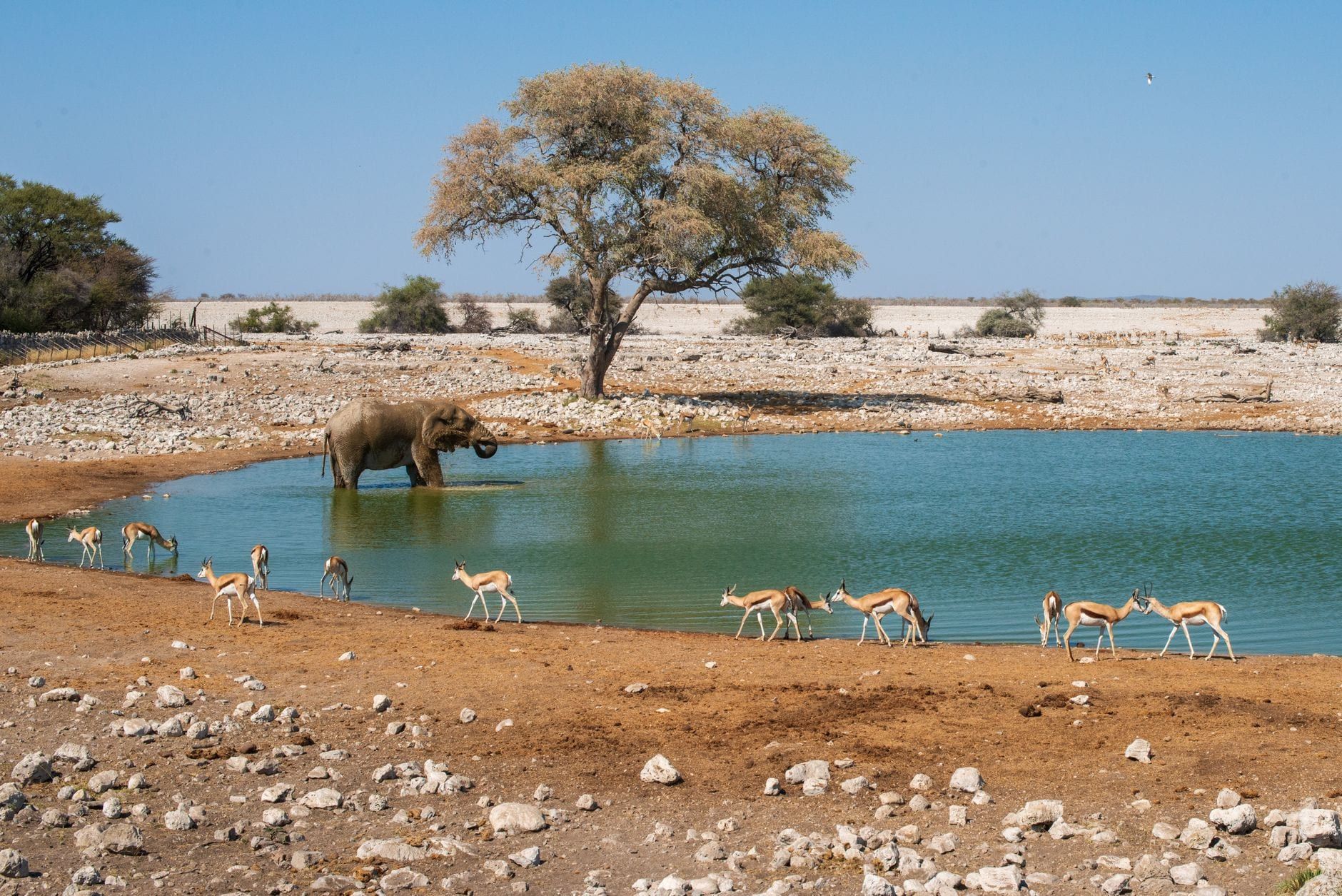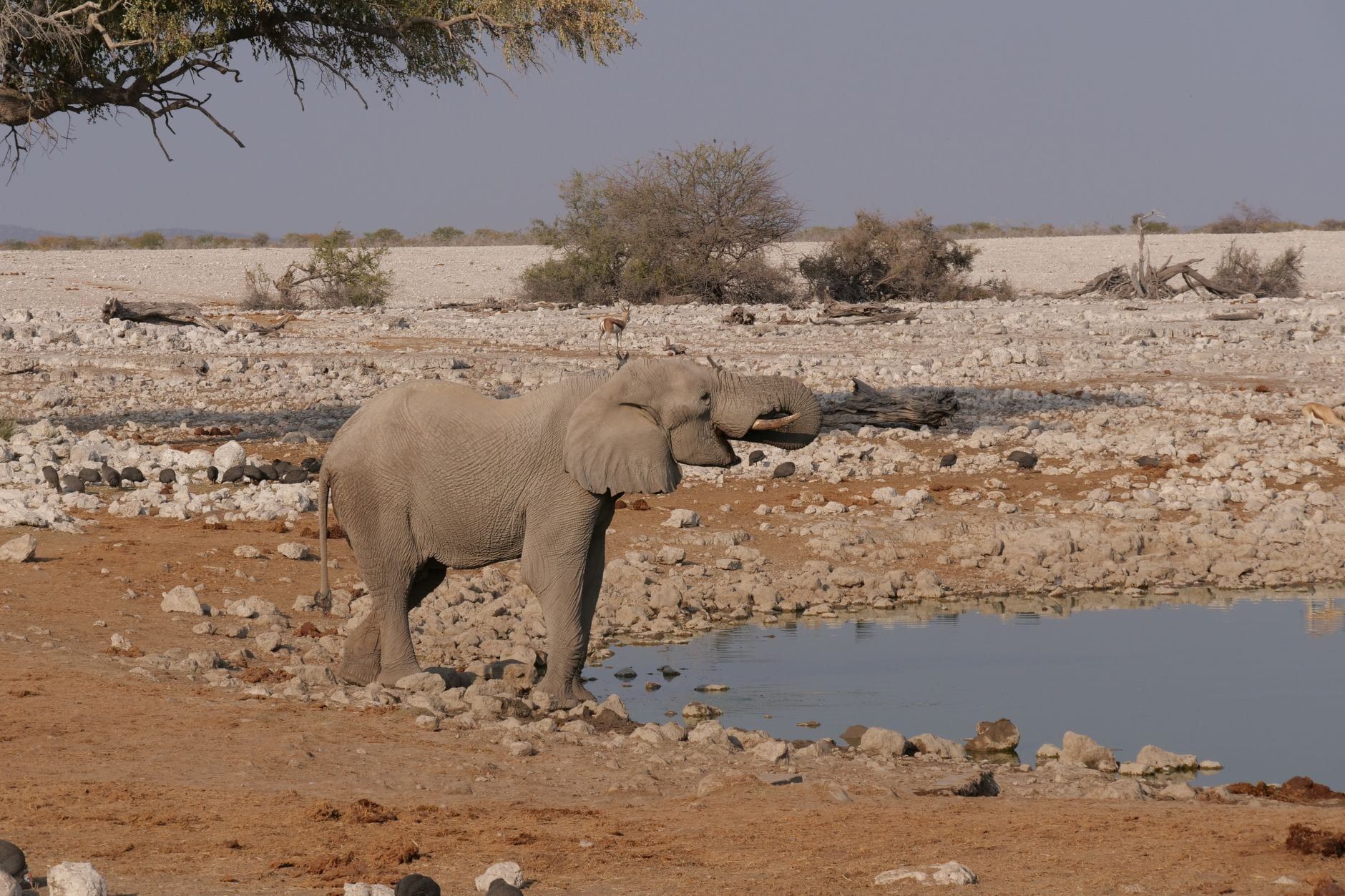
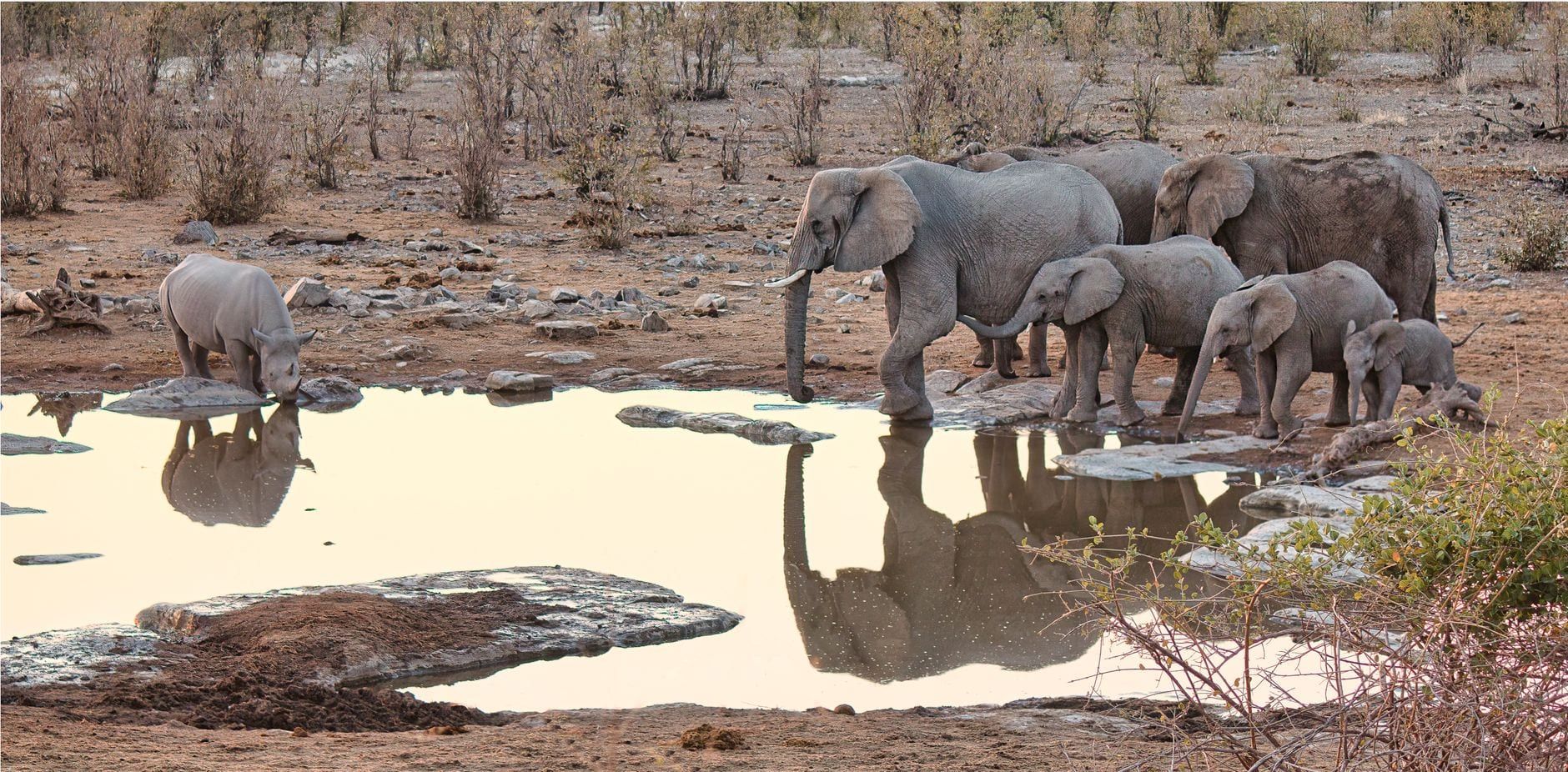
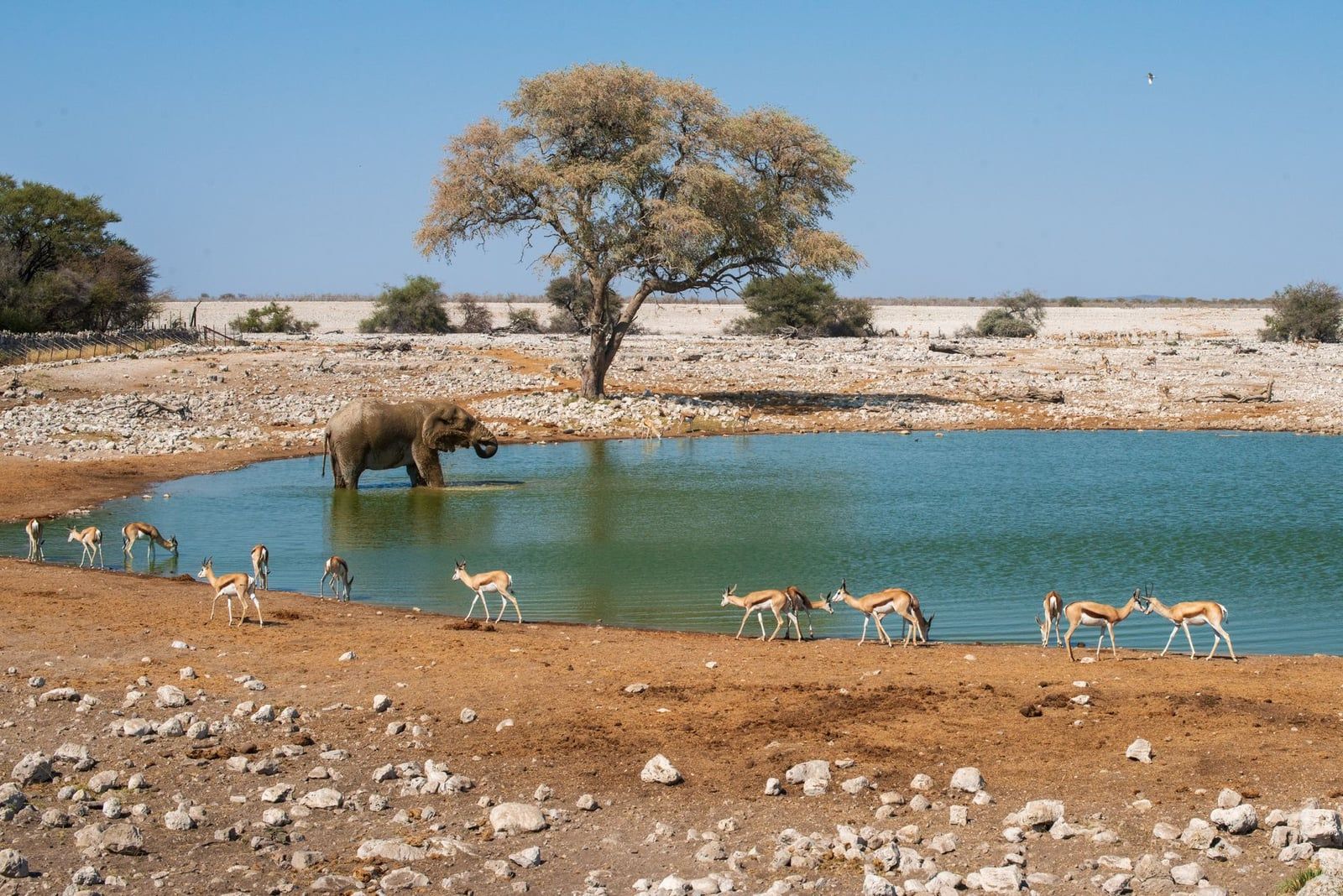
Go between May and October. Through the southern-hemisphere winter, water disappears across this 22,935 km² park in northern Namibia and its animals crowd the 86 waterholes that stay wet year-round, turning sightings into something you can plan a trip around. July, August and September are the peak — top ratings for game viewing everywhere you look, predators drinking at dusk, elephant herds stacked at the water's edge.
Other months have their own case. May and October deliver nearly the same waterhole action with fewer vehicles and softer rates. The green season, November to April, trades concentration for emerald grass, newborn antelope, migrant birds and thunderstorms over the Etosha Pan. Here's how to match the calendar to what you actually want.
Etosha at a glance: the quick answer
First safari, one shot at it? Book August or September. It's properly dry, animals have nowhere to drink but the waterholes, and daytime temperatures sit around 28°C in August and the low 30s in September — before October's furnace. July matches them for game and adds the coldest, most photogenic dawns, but it's the busiest month of the year.
| You want | Go in |
|---|---|
| Classic dry-season game viewing | July to September |
| Cooler days, thinner crowds | May and June |
| Best value, near-peak viewing | May or October |
| Green landscapes and newborn animals | December to April |
| Peak birding and migrants | November to March |
| Flamingos on the flooded pan | January and February |
Month ratings fill in the rest of the picture.
| Months | Game viewing | Weather | Crowds and price |
|---|---|---|---|
| Jan–Feb | Poor | Hot, humid, wettest | Lowest rates, quietest |
| Mar–Apr | Poor to fair | Rains easing, 30°C days | Low rates, quiet |
| May–Jun | Good | Cool and dry | Shoulder season, thinning out |
| Jul–Aug | Excellent | Mild days, cold dawns | Peak crowds, peak rates |
| Sep–Oct | Excellent to good | Hot and hazy; October hottest | Busy, easing late October |
| Nov–Dec | Fair | Hot, first storms | Low-season rates return |
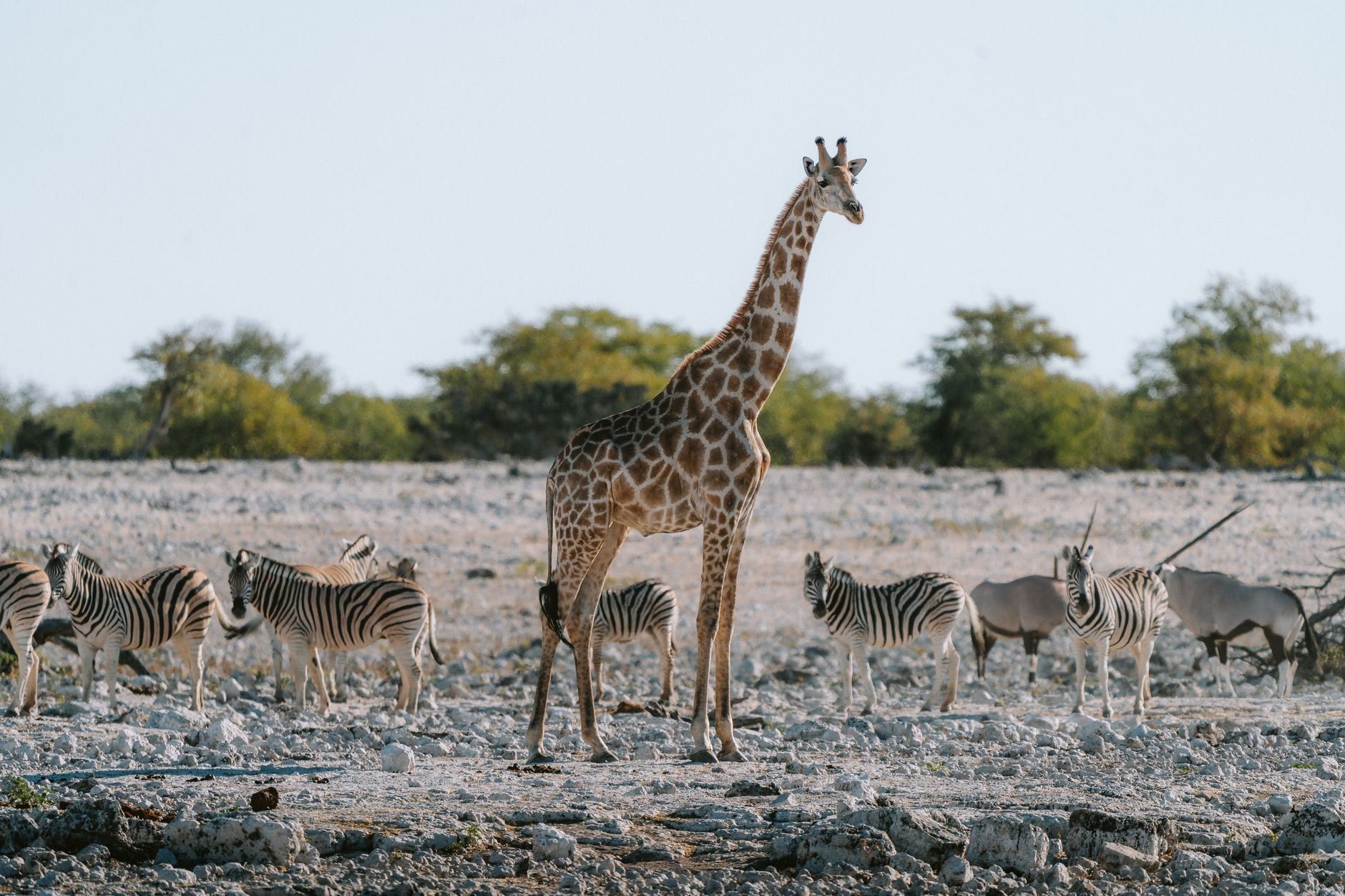
No month is a write-off, though. Etosha is a huge, self-drive park of open savanna, so even in the wet January–March trough you'll find giraffe, zebra and elephant around the permanent waterholes — you'll just work harder for them. Roughly 200,000 visitors a year pass through, and the animals you can expect shift with the seasons rather than vanish.
How the seasons work in Etosha: dry vs green
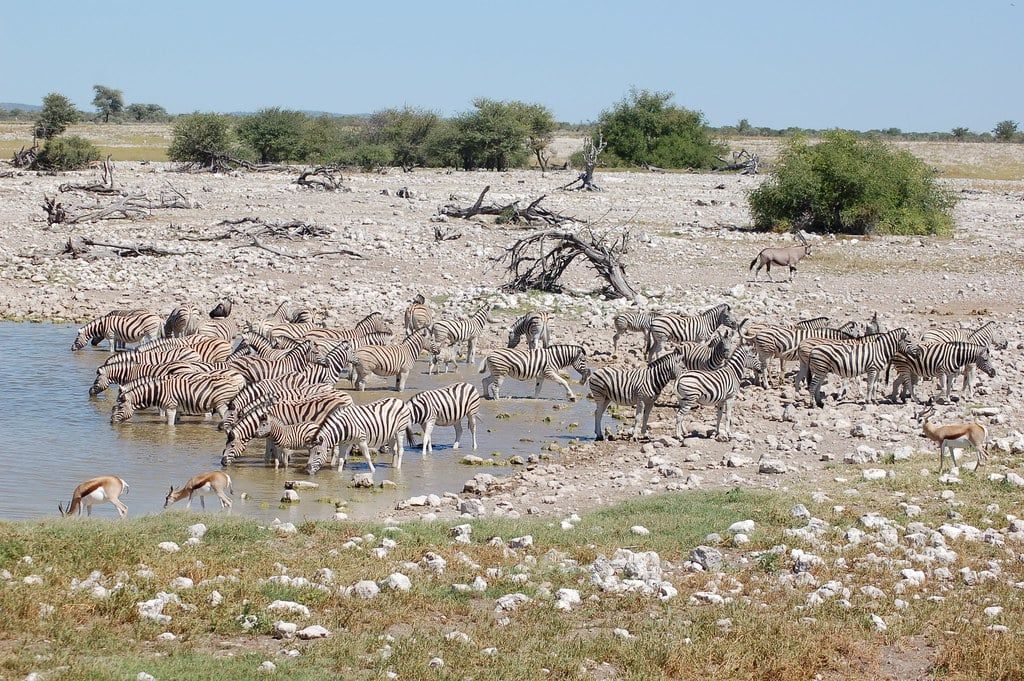
Water drives everything here. Rain stops in May, and by June there's essentially none — June, July and August all average zero. Natural pans and riverbeds dry out, grass thins to straw, and animals fall back on the waterholes, several of them maintained year-round precisely to keep game in view. By late winter a dozen species rotate through a single hole before breakfast. Mornings are cold: 7–8°C at dawn in June and July, sometimes near freezing on an open game-drive vehicle.
November flips it. Afternoon thunderstorms return, the savanna greens within weeks, and animals scatter — why queue at a waterhole when rainwater sits in every pan? That dispersal is the green season's cost. Its rewards: calving antelope, migrant birds in breeding plumage, and an Etosha Pan that floods after good rains and can draw tens of thousands of flamingos.
The heaviest rain is concentrated: roughly 120mm in January, 140mm in February, 80mm in March. November and December are transitional months — hot, increasingly stormy, still largely viewable.
Comfort and health track the calendar too. Green-season days run above 32°C with humidity, and this is the higher-risk malaria window. Dry-season days are mild at 25–28°C, with cold dawns and almost no mosquitoes.
Etosha month by month
Twelve months, two rhythms. These are the numbers and the verdicts for each, with daytime highs and overnight lows.
January to March: hot, wet and green
January averages 35/20°C with about 120mm of rain; February, 34/20°C and the wettest month at 140mm; March, 32/18°C as it eases to 80mm. Game-viewing ratings sit at poor — animals dispersed, grass high, roads muddy. What you get instead is Etosha at its lushest, the year's best birding, near-empty camps, and flamingos on the pan in January and February if the water came. March is the quiet-month pick: big skies, fewer crowds, landscapes still green.
April to May: the transition
April cools to 30/15°C with about 40mm of rain, and impala and springbok drop their lambs — predator sightings tick up accordingly. By May (28/11°C, roughly 6mm) the waterholes are regaining their monopoly, viewing ratings jump to good, days are fresh, and the crowds haven't arrived. May is the thinking traveller's month.
June to August: the cool, dry core
Zero rain, three months running. June (25/8°C) brings zebra foals; July (25/7°C) is the waterhole-photography month, cold dawns and stacked herds; August (28/9°C) adds peak predator action as lions work the drinking crowds. Ratings run excellent through all three. Pack the fleece — a 06:00 drive in July feels like a different country from the afternoon.
September to October: peak sightings, rising heat
September (32/14°C, about 1mm of rain) is arguably the single best month for general game viewing: maximum concentration, clear light, haze just building. October is the hottest month at 35/17°C and sometimes more, over a bleached and dusty landscape. Sightings stay superb, but midday is a furnace and crowds only thin in the final week.
November to December: the storms return
Temperatures hold near 35/19°C as rain rebuilds — about 55mm in November, 95mm in December. Expect afternoon thunderstorms, a green flush across the plains, summer blooms in December, and the first migrant birds back. Viewing drops to fair; the landscapes and the light are at their best.
Best time for wildlife viewing (and specific animals)
Season ratings lump all wildlife together; animals don't move on one calendar. Here's the species-by-month map.
Predators: July to September
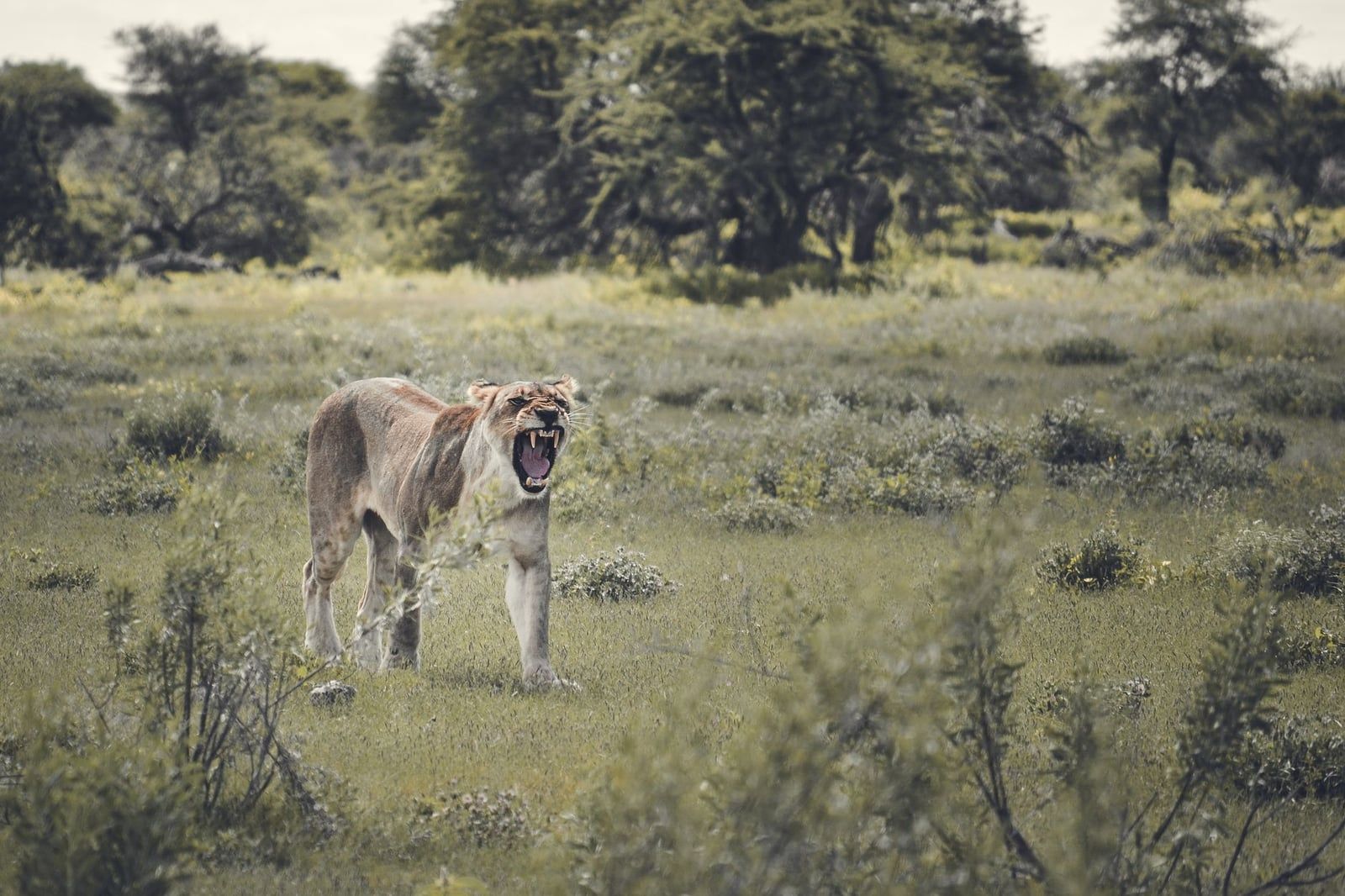
Late winter is when lions and cheetah hunt the waterhole queues. Prey is concentrated, cover is thin, and ambushes unfold metres from parked vehicles. July through September is the window, with August the strongest of the three.
Black rhino: May to September, after dark
Etosha holds the world's largest black rhino population, and the dry months push them to Okaukuejo's floodlit waterhole — peak appearances between 21:00 and midnight. Stay two nights there in this window and a rhino sighting comes on the vast majority of trips. Halali's Moringa waterhole is the backup.
Elephants and big herds
Elephant sightings build through the dry season as family bands merge at the permanent holes; the park counts more than 2,500. By September, breeding herds of fifty-plus work the central circuit around Gemsbokvlakte and Goas.
Flamingos: January and February
The Etosha Pan fills only after good summer rains, and when it does, flamingos can arrive in the tens of thousands to feed and breed. It's the park's rarest spectacle and entirely rain-dependent — no water on the pan, no flamingos.
Calving: April and June
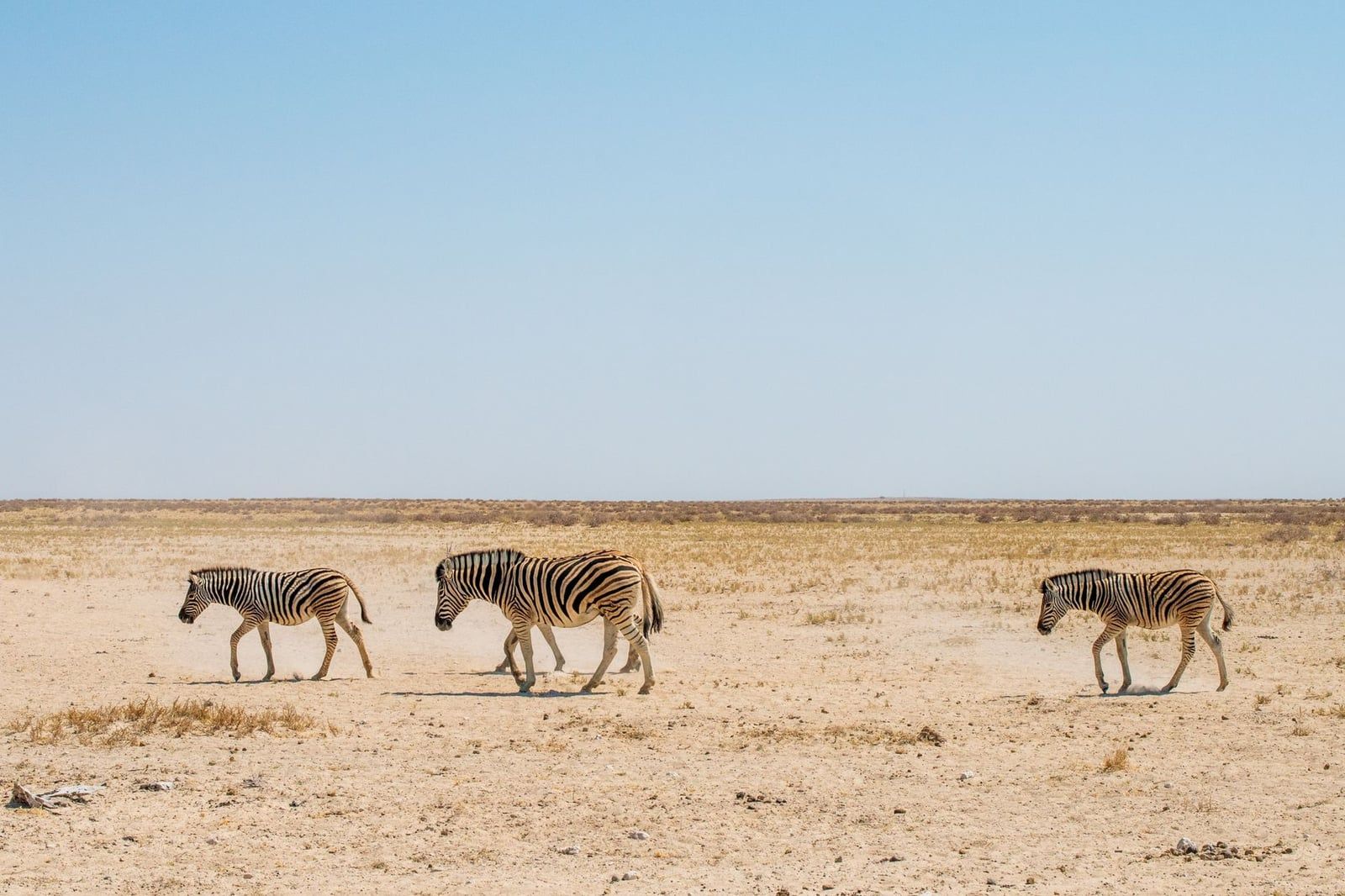
Impala and springbok lambs arrive in April; zebra foals follow around June. Newborns generally track the greener months, and the cats know it.
Best time for photography and birding
Photographers and birders want different Etoshas. Pick your look first, then book.
The dry-season look: August to October
Golden dust, pale grass, animals backlit at the water's edge — this is the Etosha of the coffee-table books. Light is stark, horizons hazy, and the drama compressed into a few square metres around each hole. If your portfolio is waterhole action, this is your window.
The green-season look: January to March
Storm light is the argument here. Towering cumulus over the pan, saturated grassland, reflections in seasonal water — landscape shots that simply don't exist in winter. You'll find fewer animals, and each one takes work. Trade the telephoto for a wide lens.
Birding: November to April
Migrants arrive with the rains and birding peaks, stacking onto a 407-species list. Even in October the waterholes concentrate resident birds, and raptors and seed-eaters are year-round. Birders should book January to March and budget real time at Fischer's Pan near Namutoni.
Crowds, prices and when to book
July to November is high season, with July through October busiest around the famous waterholes — expect a queue of vehicles at the big holes by 08:00 in August. Etosha never feels truly packed (the park is enormous and most people self-drive), but the good camps don't have room for everyone, whatever kind of Etosha safari you're running.
Accommodation pressure peaks in August and September. The six in-park camps, booked through Namibia Wildlife Resorts, sell out months ahead for those months — reserve as early as you can. Also avoid South African school holidays and the Christmas/New Year rush, when travellers from over the border fill the rest camps too.
December to June is low season: lower rates, easy availability, a greener park. May and October are the value plays — near-peak viewing with thinner traffic. October's heat is the trade; early November can sneak you the same sightings at low-season rates.
One cost note: park entry fees rise steeply from 1 April 2026, with the foreign adult rate going from NAD 150 to 280 per day, so check current entry fees and gate hours before budgeting.
Pairing Etosha with Sossusvlei and Swakopmund works in the same May to October window. Most itineraries start in Windhoek, roughly 420–435 km south of Andersson Gate, and tours from Windhoek cover the whole circuit — or plot your own route to the park in a day's drive.
Planning your visit around the season
Once you've picked the month, work the day. These are the timing details that decide how many sightings a given visit actually produces.
Daily viewing windows
The single most productive hour of an Etosha day is 06:00–07:00 at a busy waterhole, June to October. Dawn (06:00–09:30) is the priority window overall; 10:00–14:30 is the lull, when animals shade up — the exceptions are big waterholes like Goas and Rietfontein, which stay active. From 15:00 to gate closing, activity climbs again. Gates open at sunrise and close at sunset, and the times change weekly, so confirm at reception every evening. Camp-run drives and guided safari tours handle this pacing for you.
Floodlit night waterholes
Okaukuejo is the headline act: black rhino peak between 21:00 and midnight, with elephant, lion and hyena as regulars. Halali and Namutoni also run floodlit holes, delivering elephant, lion and jackal after dark. Night driving is prohibited in the park, so these — plus camp-run night drives — are the only post-sunset game shows going.
Why staying inside the park matters
Camp guests are at the gate when it opens; day visitors from outside lodges reach the first waterhole an hour or more after the best light has passed. Our camp-by-camp accommodation guide covers the details, but the short version: Okaukuejo for the waterhole, Halali for the central position, Namutoni for the east. Two or three nights at Okaukuejo specifically maximises the rhino odds.
Malaria by season
Etosha is low-risk, and the dry winter months are effectively mosquito-free. The slighter risk sits in the wetter stretch, roughly November to June, concentrated near the pan margins. Travellers who take prophylaxis for that window usually use Malarone — once daily, starting a day before entering the zone and continuing for seven days after leaving. Repellent and long sleeves at dawn and dusk are sensible whatever the month.
How many days, and what to pack
Allow at least five days. The park covers 22,935 km², the camps sit hours apart, and the different landscapes — the pan edge, the mopane woodland, the central waterholes — reward slow movement. Shorter trips work if you base at a single camp. Packing is a layers question: June and July dawns run near freezing, so fleece and beanie; October afternoons can touch 40°C, so structure the day around dawn and dusk and rest at camp midday.
Frequently asked questions
What is the best month to visit Etosha National Park?
August or September, for the strongest combination: excellent dry-season viewing, animals concentrated at waterholes, and day temperatures of 28–32°C before October's heat. July is equally good for game but busier and colder at dawn.
Is Etosha worth visiting in the wet season?
Yes, if you know what you're buying. The wet months bring green landscapes, newborn animals, the year's best birding and, after good rains in January and February, flamingos on the flooded pan. You trade away reliable sightings — animals disperse — and accept heat, humidity and higher malaria risk.
When is the best time to see black rhino in Etosha?
Between May and September. As seasonal water dries up, black rhino come to Okaukuejo's floodlit waterhole, most often between 21:00 and midnight. Two nights there in this window produces a sighting on the vast majority of trips.
Which months offer the best balance of price, crowds and wildlife?
May and October. Waterhole viewing is close to the winter peak, vehicles are fewer and rates softer. October is the hotter trade — days around 35°C, occasionally 40°C — so plan dawn-and-dusk game viewing and rest through midday.
Is there malaria risk in Etosha, and when?
Etosha is a low-risk area, with risk concentrated in the wetter months, roughly November to June; the dry winter is effectively mosquito-free. For green-season travel, many visitors take prophylaxis — Malarone is the usual choice, once daily from a day before entry until seven days after leaving. Confirm with a travel-health clinic.
How many days do you need in Etosha?
At least five days for a full loop — the park spans 22,935 km² and the main camps sit hours apart. Two or three nights works if you focus on one camp's waterhole, such as Okaukuejo for rhino, but you'll skip the east around Namutoni.
When is Etosha most crowded, and do I need to book far ahead?
July to November is high season, with July through October busiest at the famous waterholes. The park itself never feels packed, but inside-park rest camps sell out months ahead for June to October. Book early, and avoid South African school holidays and the Christmas/New Year rush.
Sources
- meft.gov.na/national-parks/etosha-national-park/217
- etoshanationalpark.org/times-fees
- etoshanationalpark.org/malaria
- etoshanationalpark.com.na/plan-your-visit/etosha-month-by-month
- etoshanationalpark.com.na/wildlife/etosha-wildlife-viewing-times-by-season
- embassyofnamibia.fr/perch/resources/pdf/etosha-national-park-fact-sheet-etosha.p
- en.wikipedia.org/wiki/Etosha_National_Park