Etosha National Park spreads across 22,935 km² of northwestern Namibia, anchored by a salt pan so large it's visible from space. Its 86 waterholes and floodlit night viewing make it one of Africa's most reliable places to watch lion, elephant and the world's biggest black rhino population.
Etosha National Park spreads across 22,935 km² of northwestern Namibia, about 420 km north of the capital, Windhoek. And to settle the internet's favorite mix-up: it's in Namibia, not Tanzania — Tanzania's flagship reserves are the Serengeti and Ngorongoro, roughly 2,000 km away. Etosha is Namibia's number-one tourist destination, drawing around 200,000 visitors a year.
Everything here orbits the Etosha Pan, a 4,730 km² salt flat that takes up nearly a quarter of the park. It runs about 130 km long and up to 50 km wide, making it the largest salt pan in Africa and visible from space. Summer rains reach it only briefly. When they do, flamingos move in; by winter it's back to a dry white floor where heat mirages convince you it's flooded.
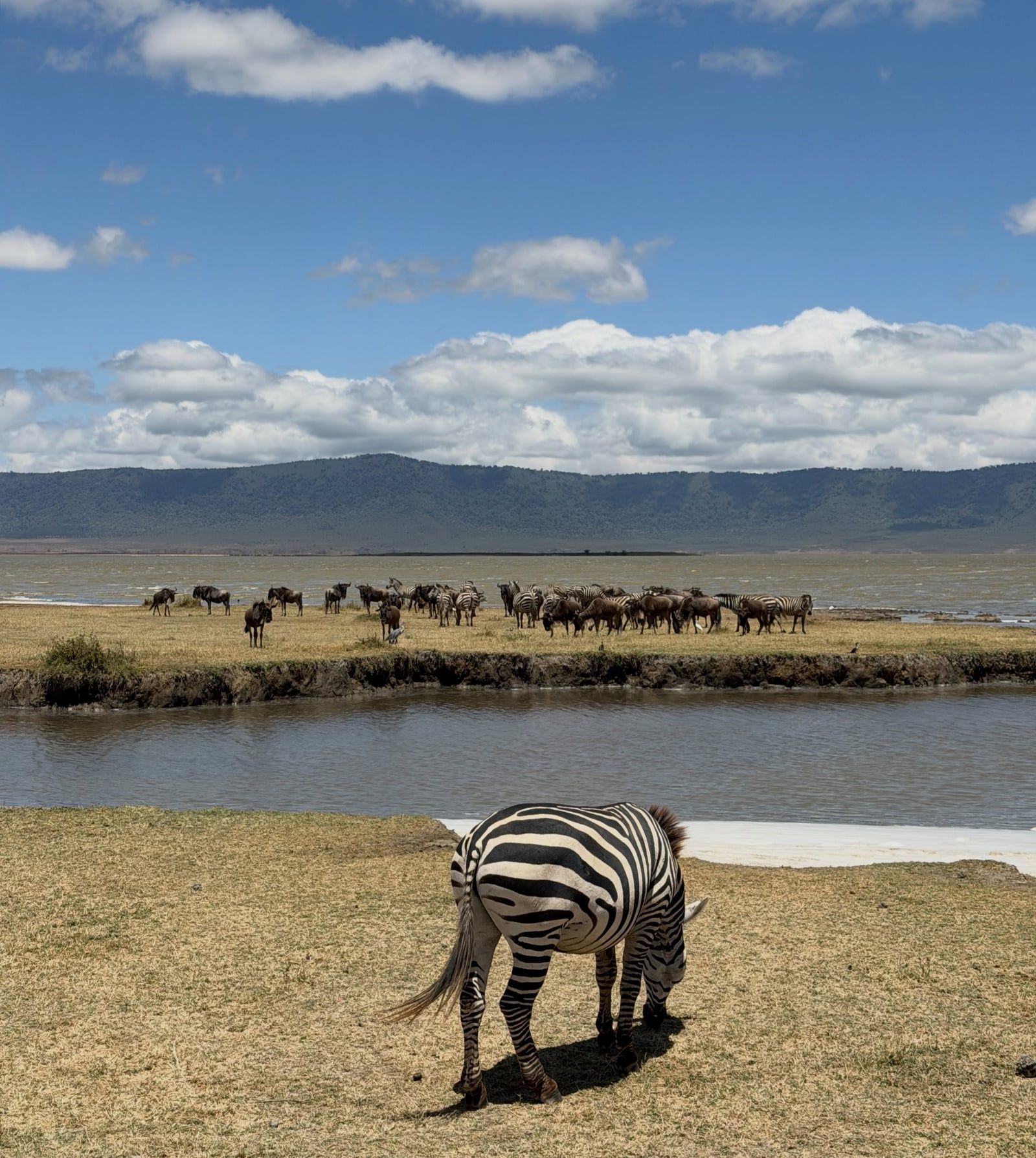
Game viewing works differently here than at most African parks. Instead of combing open country, you park at a waterhole and wait — the dry season, May to October, concentrates elephant, lion, giraffe, zebra and both rhino species at what water remains, so sightings get unusually predictable. Elephants alone number more than 2,500. At the rest camps, floodlit waterholes extend the day after dark: sit on a bench at Okaukuejo at night and a black rhino may drink meters away, spotlit against the dust. Most visitors rank that single evening as the best of their trip. Most stay two to five nights, working a loop between the state camps at Okaukuejo, Halali and Namutoni.
Francis Galton and Charles Andersson became the first Europeans to record the pan on 29 May 1851 — Galton an English explorer, Andersson a Swedish naturalist. Their accounts put the vast white expanse on European maps for the first time. Local Oshindonga speakers already knew it well.
Half a century later, in March 1907, Friedrich von Lindequist, governor of German South West Africa, proclaimed the region a game reserve under Ordinance 88. Few conservation areas on the continent are older. The territory he protected was considerably bigger than the park you visit today.
Boundaries contracted over the following decades. In 1958 the area was reclassified as a Wildschutzgebiet, a protected game area, and in 1967 an act of the South African parliament — Namibia was then under South African administration — formally made it a national park. Even trimmed, it stayed enormous. Slovenia would fit inside the current boundary with room to spare.
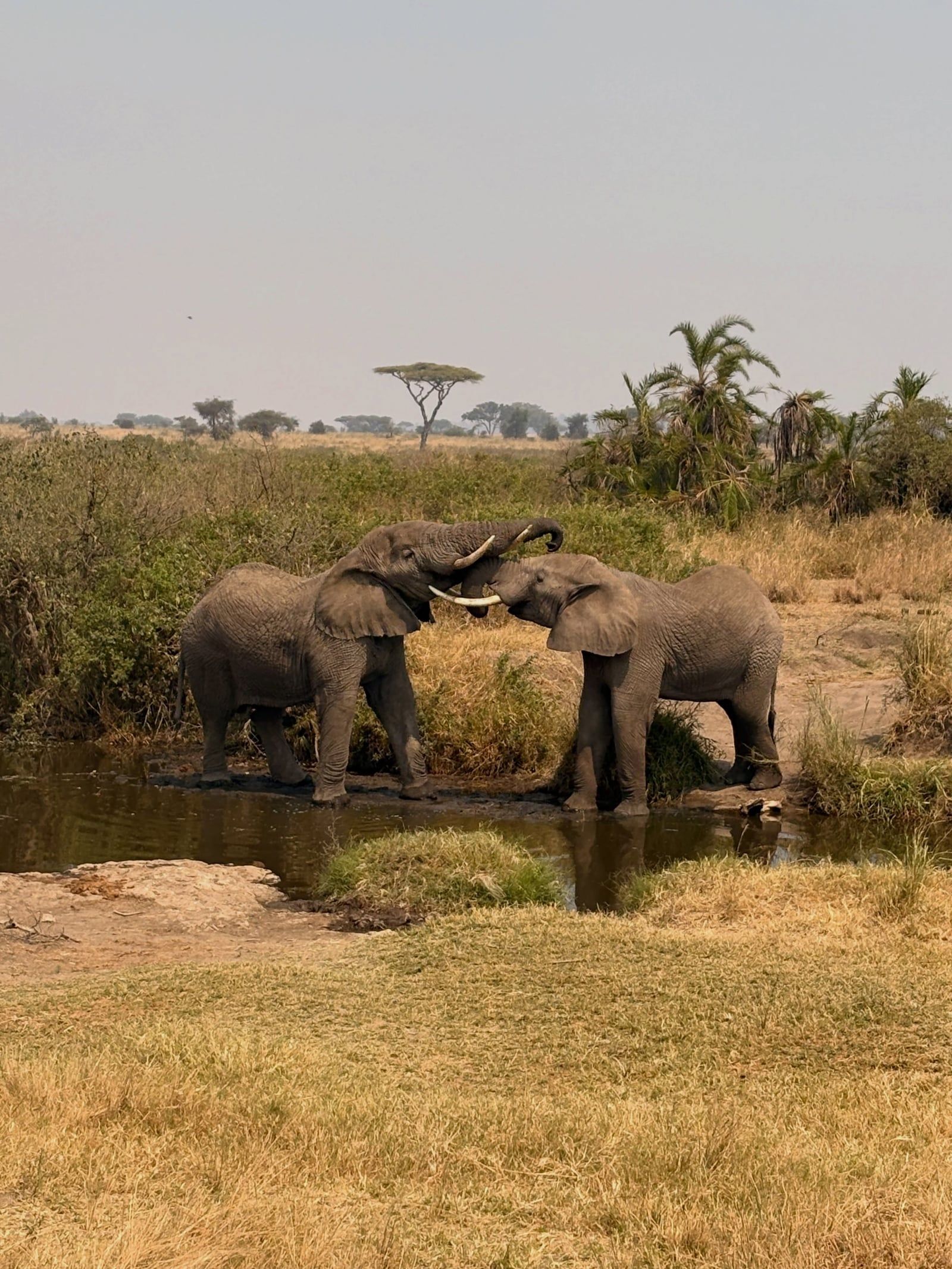
Mid-century, the wildlife was in poor shape. A 1954 count found just 26 elephants in the park. Boreholes drilled along the nineteenth latitude then gave them dependable water, and the population climbed past 2,500. In the early 1970s, 200 black-faced impala were relocated from the Kunene region to establish a park population of a species found nowhere else on Earth. In 1993, Etosha's recovering black rhino supplied the first satellite population for Namibia's new Rhino Custodianship programme, placing breeding animals on private and communal land beyond the fence.
Today the park falls under Namibia's environment ministry, with six rest camps inside the boundary run by Namibia Wildlife Resorts, and it sits on the country's UNESCO World Heritage tentative list. Demand tells its own story: high-season camps sell out months ahead, so book by about March for a July trip.
The Etosha Pan is the park's defining landform: 4,730 km² of salty clay — about 23 percent of the park — sitting between 1,071 and 1,086 m above sea level. It's a terminal playa, the dead end of the Cuvelai drainage, so every good summer rain that reaches it eventually evaporates and leaves its salts behind. Africa's largest salt pan, 130 km long and as much as 50 km wide. Most of the year the floor is bone-dry and so level that mirages pool across it by mid-morning; the road along the edge near Fischer's Pan gives the classic sweeping view.
Around the pan, the terrain is flat, open savanna — mopane shrubland, Etosha dwarf shrubland and grassland, straddling the Nama Karoo and tree-and-shrub savanna biomes. Hills are scarce. The only notable high ground rises near Halali Camp, plus the dolomite hills of the restricted western section, where the endemic black-faced impala is easiest to find. An 850 km fence encircles the whole park. Inside it, 3,551 km of gravel roads — corrugated, dusty, occasionally rough — link 86 waterholes, a mix of natural springs and pumped boreholes, with names like Gemsbokvlakte, Charitsaub and Goas printed on every park map.
That plumbing is what makes Etosha work. In the dry months, free-standing water vanishes and everything that drinks must come to the remaining holes, so a visitor who picks one and sits still generally outperforms a driver racing between ten. Behind the spectacle sit 114 mammal species, 407 recorded birds and the world's largest black rhino population. Birders get their turn in the wet season, when Fischer's Pan fills and flamingos and pelicans arrive alongside species such as Lappet-faced Vulture, Ruppell's Parrot and White-tailed Shrike. Photograph the pan early: by mid-morning the mirages erase the horizon.
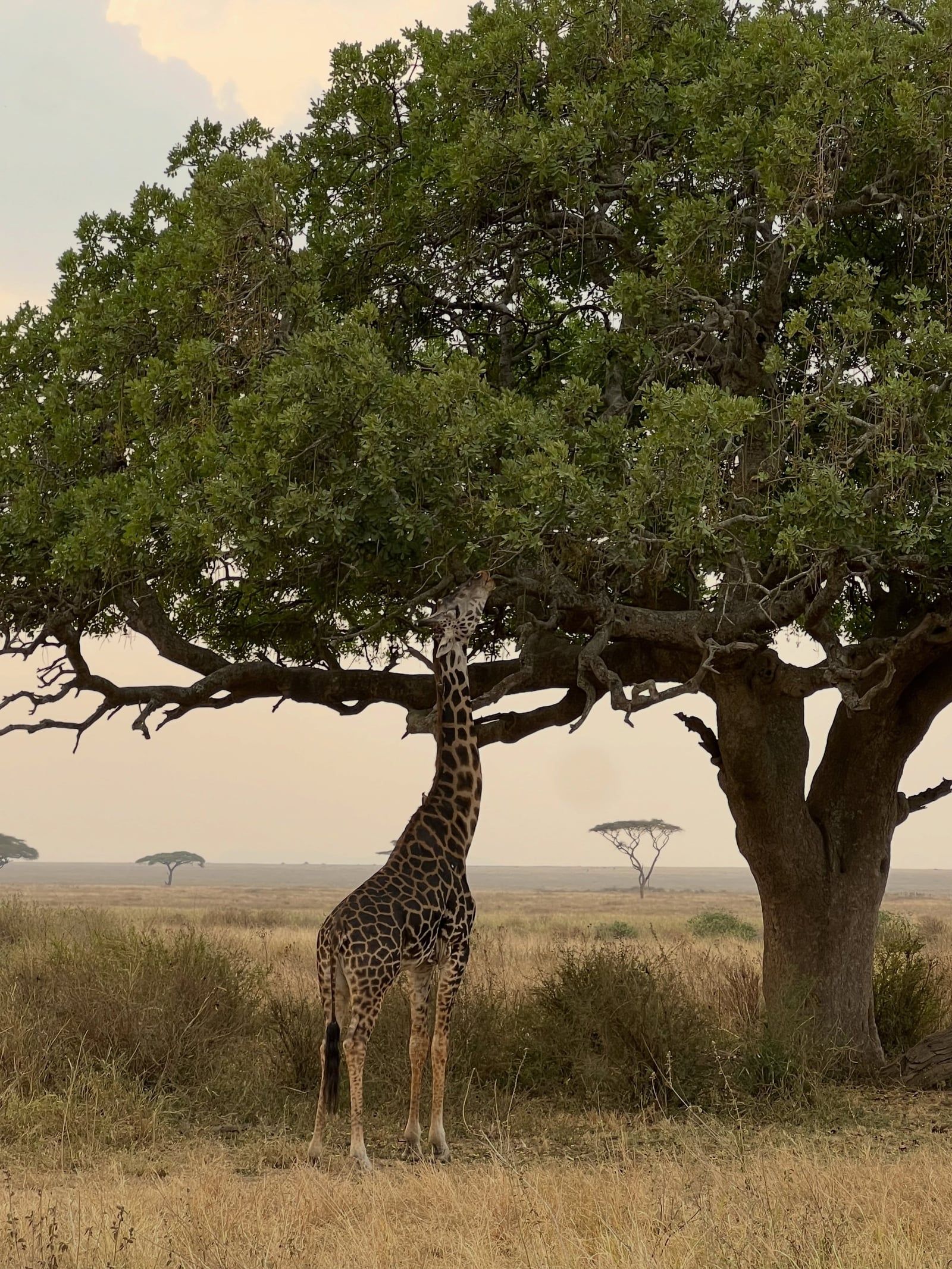
The name came first. "Etosha" is Oshindonga for "the Great White Place," and Oshindonga speakers were using it long before Galton put the pan on European maps in 1851; the word now covers the entire park. The human world stays close at its edges. Himba communities live within visiting distance of the gates, and tours to Otjikandero Himba Village, about 40 km from Andersson Gate, introduce visitors to Himba daily life, traditions and the ochre body paint the people are known for. Go with respect: ask before photographing anyone, and carry small NAD notes.
Rhino are the park's modern totem. The floodlit waterholes where visitors watch them at night have become the public face of Namibian conservation, and the stakes are real — 46 of Namibia's 61 poached black rhino in 2022 were killed inside Etosha. The ID checks at the gates, the drone confiscations and the never-published population count are all part of the response. Black-faced impala, saved here by the 1970s translocation, carry similar weight as a species that exists nowhere else.
Economically, Etosha anchors the north. Outjo and Tsumeb function as its supply towns, and lodges cluster at every gate from Ongava to Onguma. The scene most travelers now picture when they hear "Namibia" is the Okaukuejo waterhole after dark: a rhino stepping out of the blackness into floodlight and dust.
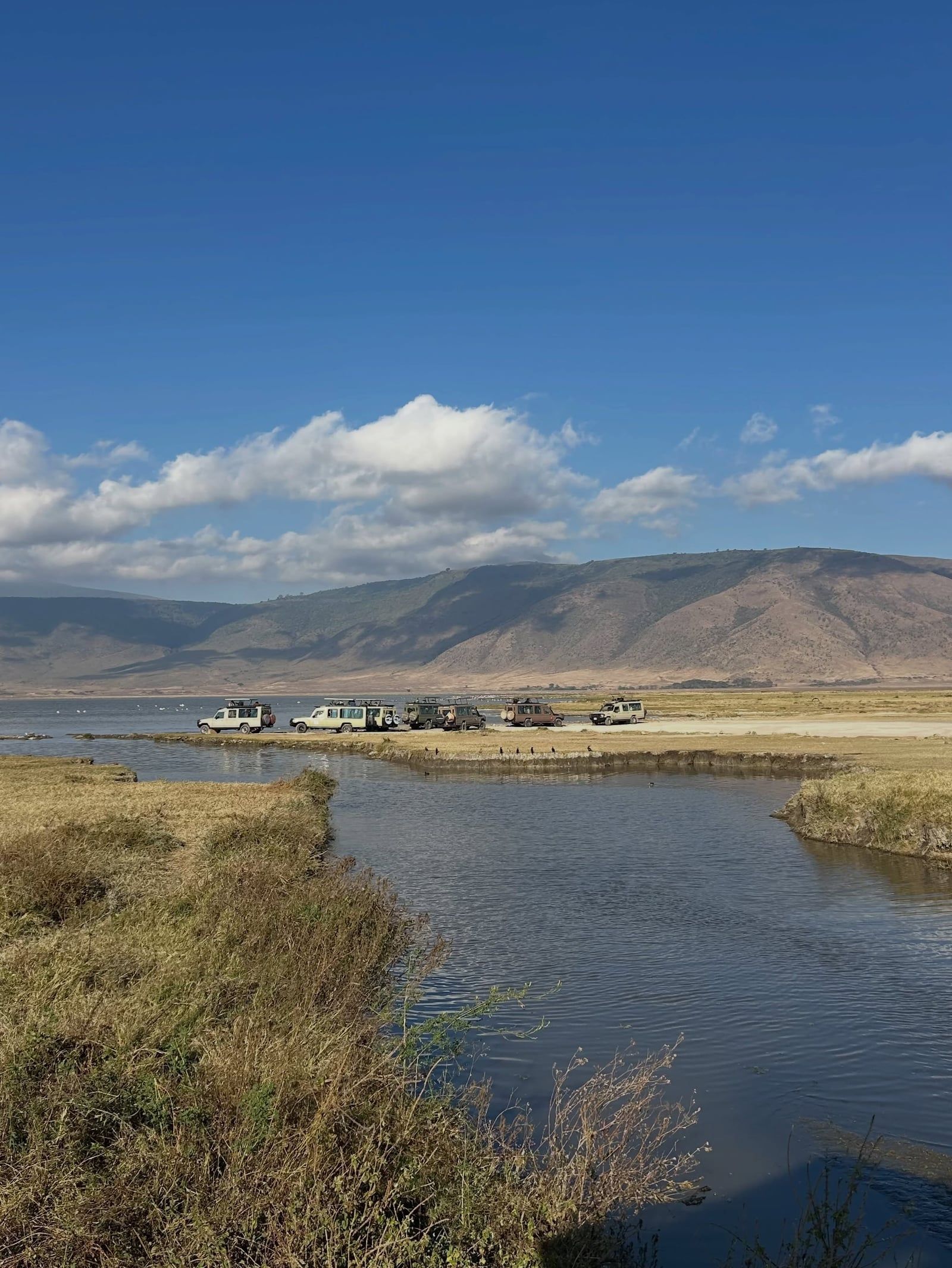
The Etosha Pan covers 4,730 km² and is Africa's largest salt pan — large enough to be identified from orbit. Heat mirages on the dry floor make it look flooded even in drought.
A 1954 count recorded just 26 elephants in the park. After boreholes were drilled along the nineteenth latitude to provide reliable water, the population grew past 2,500.
Etosha holds the world's largest black rhino population, and the exact figure is deliberately kept secret to make the animals harder to target.
The black-faced impala is endemic to this region. Around 200 were moved from the Kunene area to Etosha in the early 1970s to secure the species.
The pan fills only after good summer rains. When it does, flamingos and pelicans arrive to feed on the briefly flooded surface.
Drones are banned throughout the park with no exceptions. Any drone must be declared at entry and is held in storage until you leave.
Proclaimed a game reserve in March 1907 under German colonial Ordinance 88, Etosha predates nearly every national park in Africa.
Etosha is in northwestern Namibia, roughly 420–435 km north of Windhoek, spanning the Kunene region and bordering Oshana, Oshikoto and Otjozondjupa. Tanzania's famous parks are the Serengeti, Ngorongoro Crater and Tarangire — about 2,000 km away. The mix-up is common enough that it appears in park fact sheets.
Until 31 March 2026, foreign adults pay NAD 150 per person per day, SADC adults NAD 100, Namibian adults NAD 50, and a standard vehicle NAD 50, with children under 16 free. From 1 April 2026 the foreign adult rate rises to NAD 280, SADC to NAD 180, Namibian to NAD 60 and the vehicle fee to NAD 60. The Namibian dollar is pegged 1:1 to the South African rand, so NAD 280 equals ZAR 280.
May to October, the dry winter, when animals crowd the remaining waterholes and viewing is at its most predictable — July through September rate "Excellent" on SafariBookings. November to April brings rain, heat and scattered wildlife, but also green landscapes, newborn animals and the best birding as migrants arrive. Skip January to March if game viewing is your priority.
Not necessarily. A regular sedan handles the main gravel roads in the dry season, though higher clearance is more comfortable on the corrugated surfaces. In the wet months, November to April, 4x4 capability is advisable as roads deteriorate. The speed limit is 60 km/h, dropping to 20–40 km/h where animals are present.
Gate times follow sunrise and sunset and change weekly — for example 06:55–18:50 in early September and 06:10–19:25 in early December. Exact times are posted at each gate, so confirm at camp reception every day. All vehicles must be inside camp by closing, and night driving outside camps is prohibited.
At night, at the floodlit waterholes of Okaukuejo, Halali (the Moringa waterhole) and Namutoni. Etosha holds the world's largest black rhino population, though the exact count is kept secret. For lion and elephant, work the central waterholes — Gemsbokvlakte, Charitsaub, Goas and Nebrownii — in the dry season.
No. You must stay in your vehicle at all times except inside rest camps and at designated rest areas. It's both dangerous and illegal to exit in the open. Camp waterholes are fenced, so you can safely walk to them and watch from benches after your drive.
No, drones are strictly prohibited throughout the park. Any drone must be declared at the gate, where it's held in storage until you leave. There are no exceptions for private use.
The risk is low, especially in the dry May–October season, but a slight risk exists around the pan margins from November to April. Consult a travel-health specialist about prophylaxis, and use repellent plus long sleeves at dawn and dusk as standard precautions.
Through Namibia Wildlife Resorts (NWR), which runs the six in-park camps: Okaukuejo, Halali, Namutoni, Dolomite, Onkoshi and Olifantsrus. High season, July to November, sells out months ahead, so reserve early. Park entry fees are paid separately at the gate, and every visitor must show ID on entry.
Browse verified tours with free cancellation and instant confirmation.
Find Tours