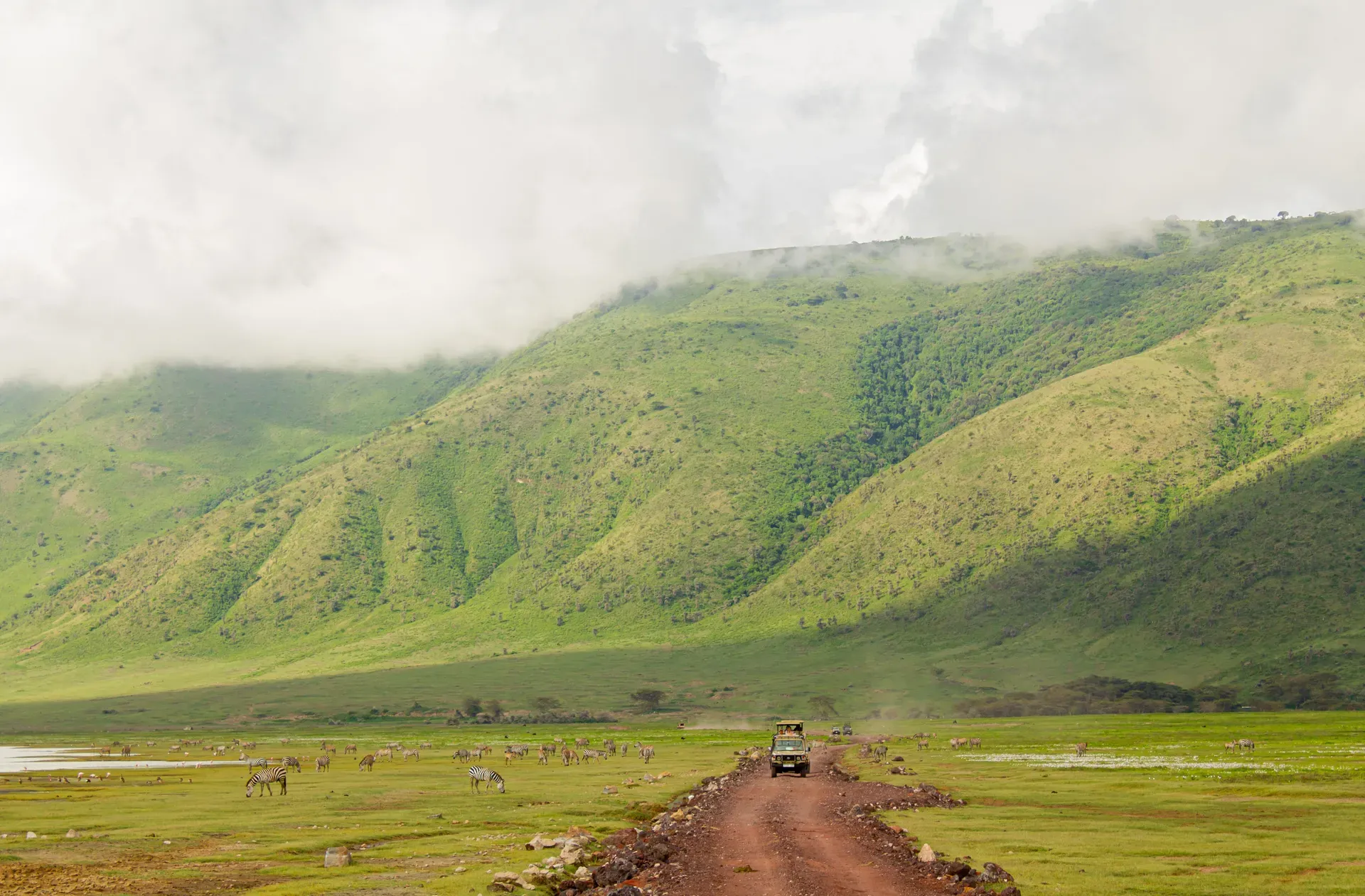
These full-day game drives through Etosha National Park are led by local guides who know the terrain and where the animals gather. Both options run about 10 hours inside the park, giving safari visitors a full day of wildlife viewing in an open 4x4 or private vehicle.
 Free Cancellation
 10-hour Etosha safari in a 9-seater 4x4 with an English-speaking local guide and lodge pickup.
 Free Cancellation
 A 10-hour private Etosha game drive with guides born in the park, aiming to spot lions, rhinos, leopards and elephants.
Read what travelers share about their experience visiting Etosha National Park — from practical tips to personal highlights.
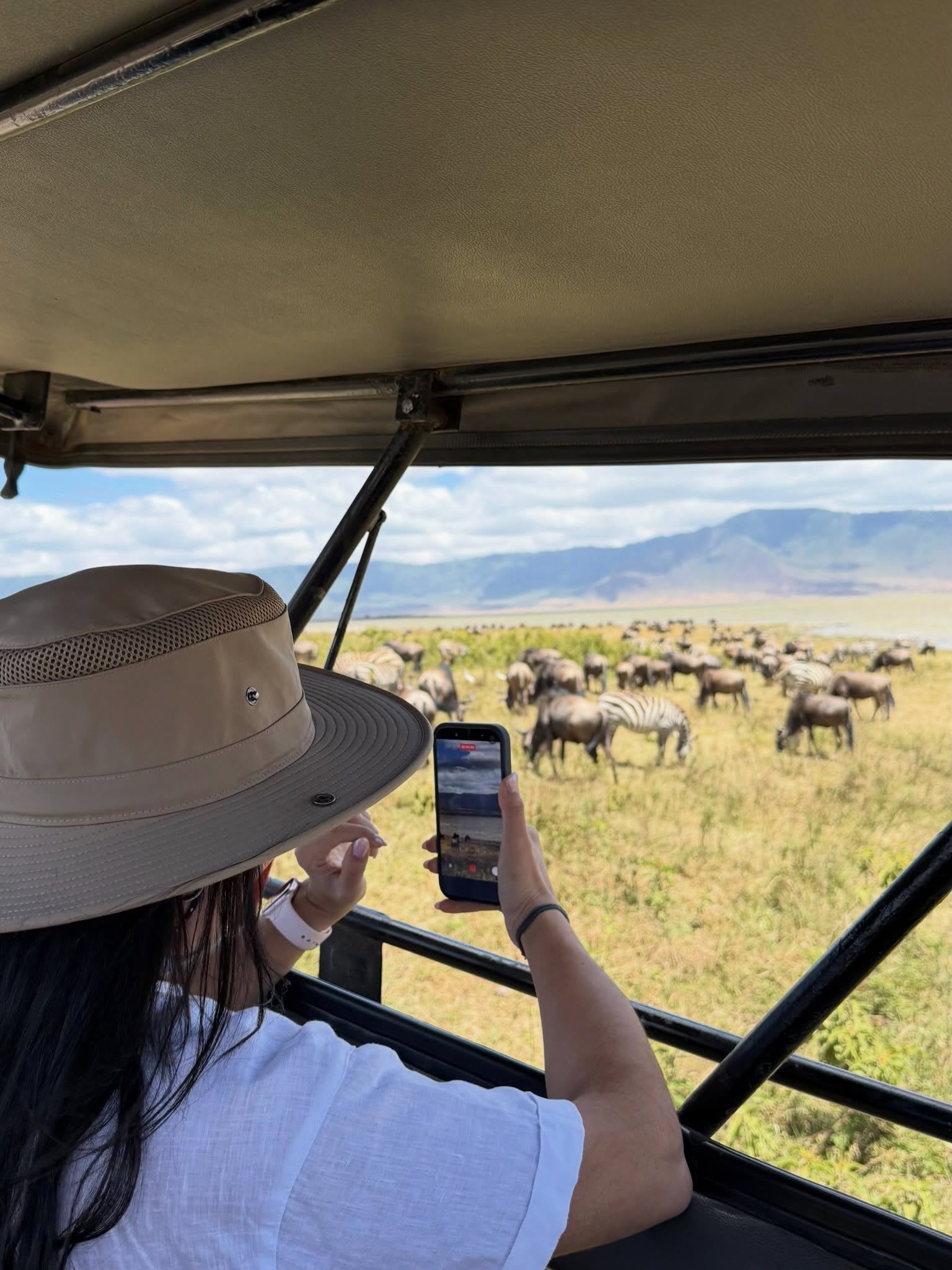
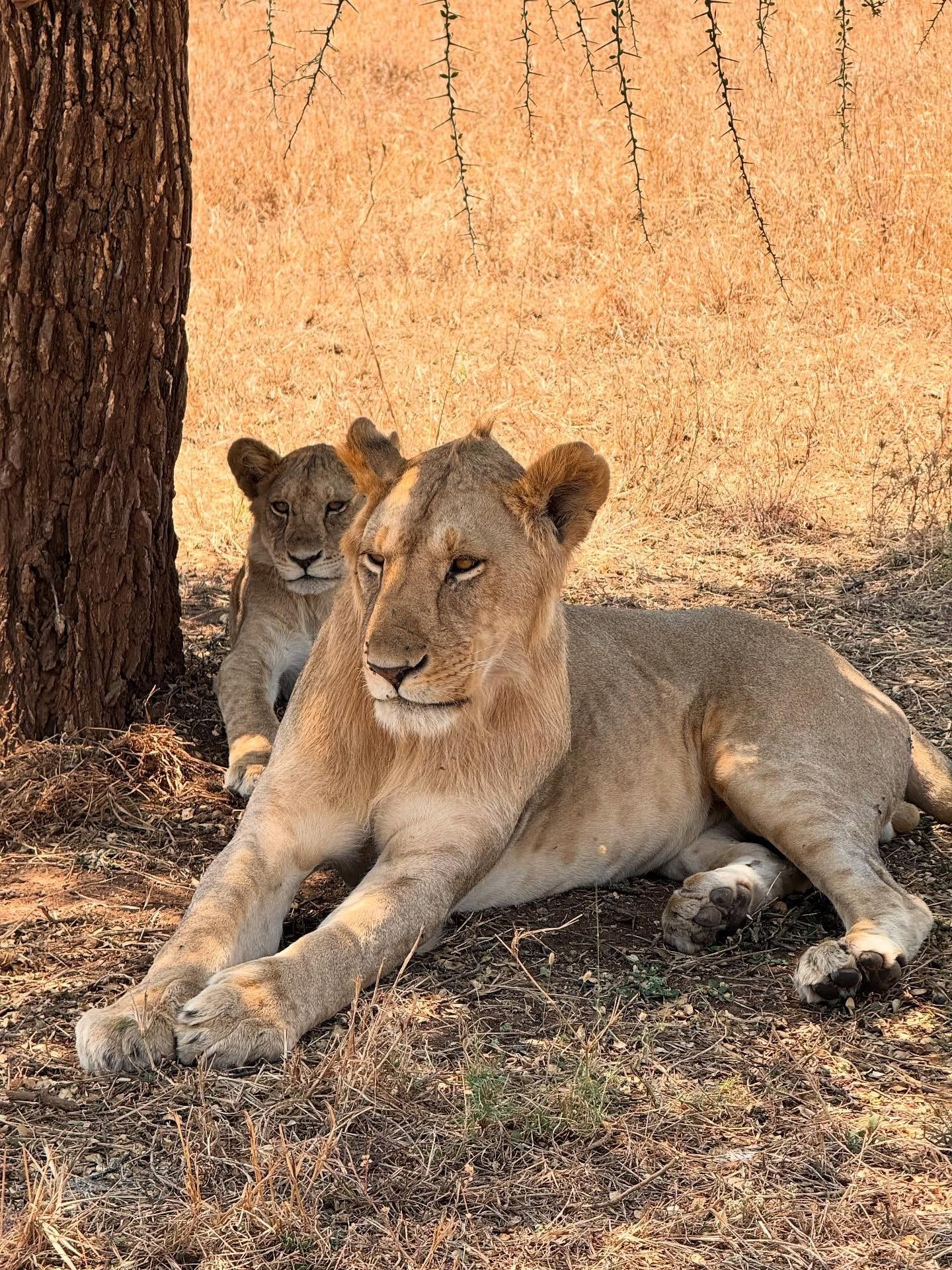
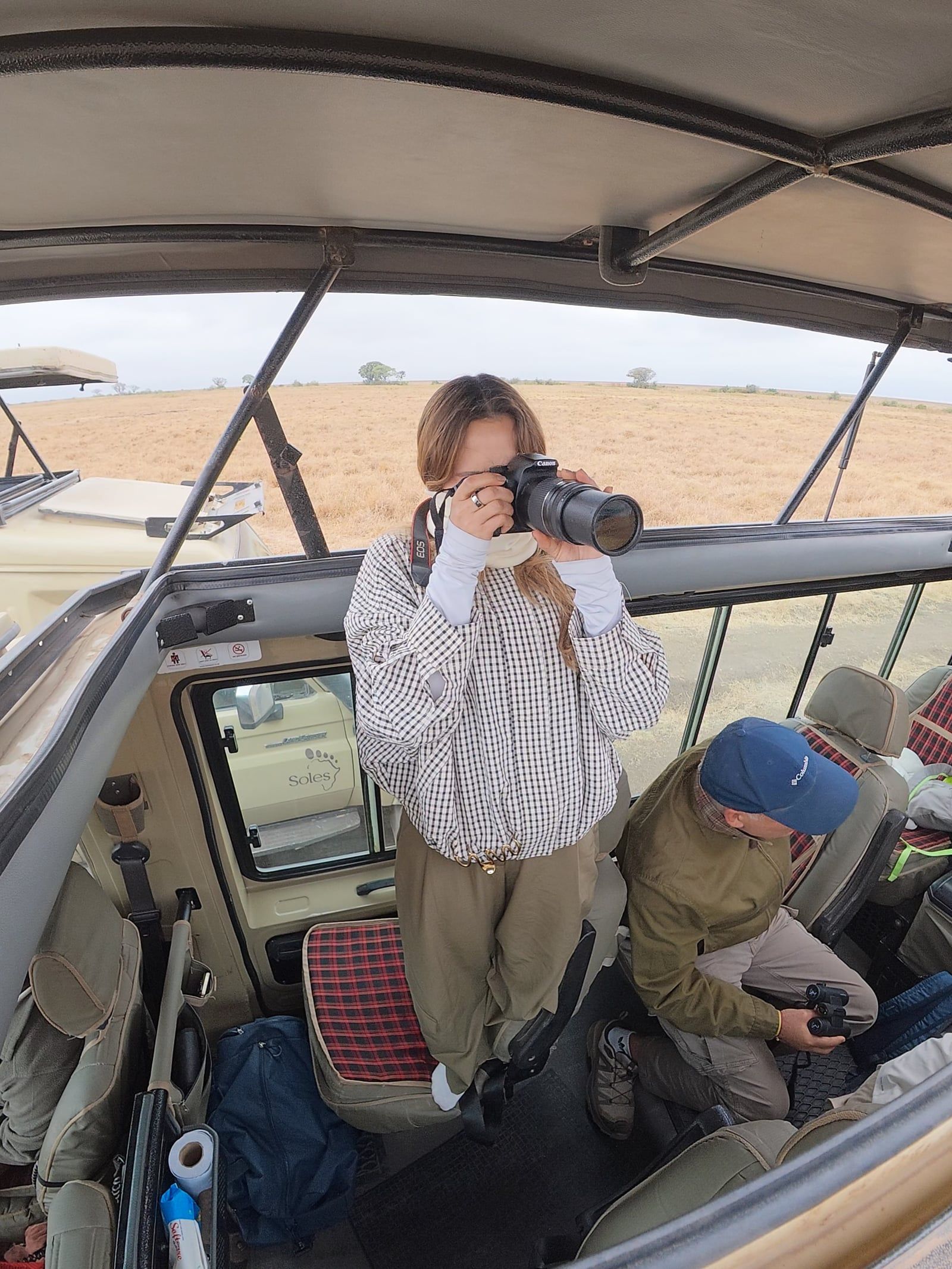
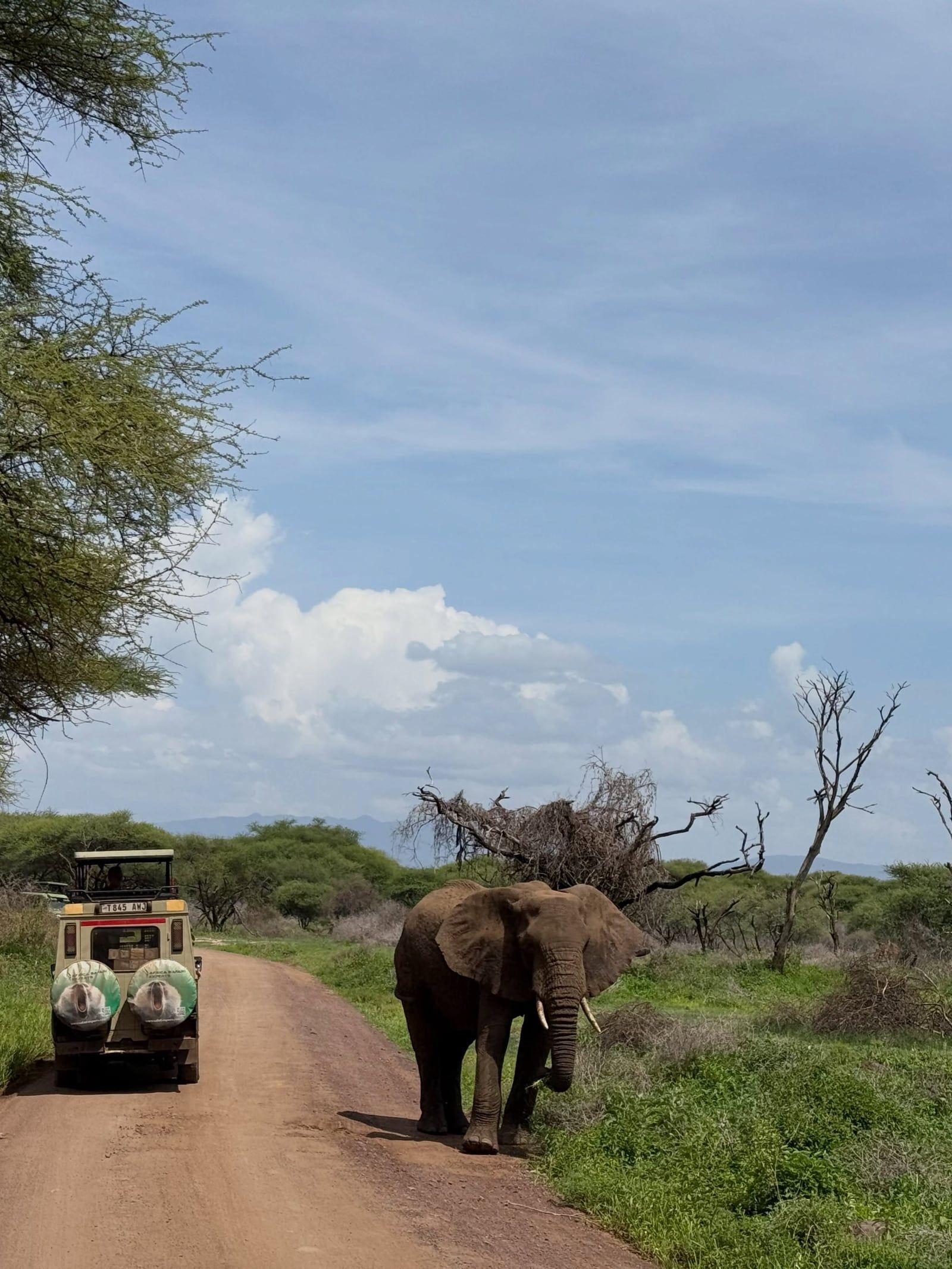
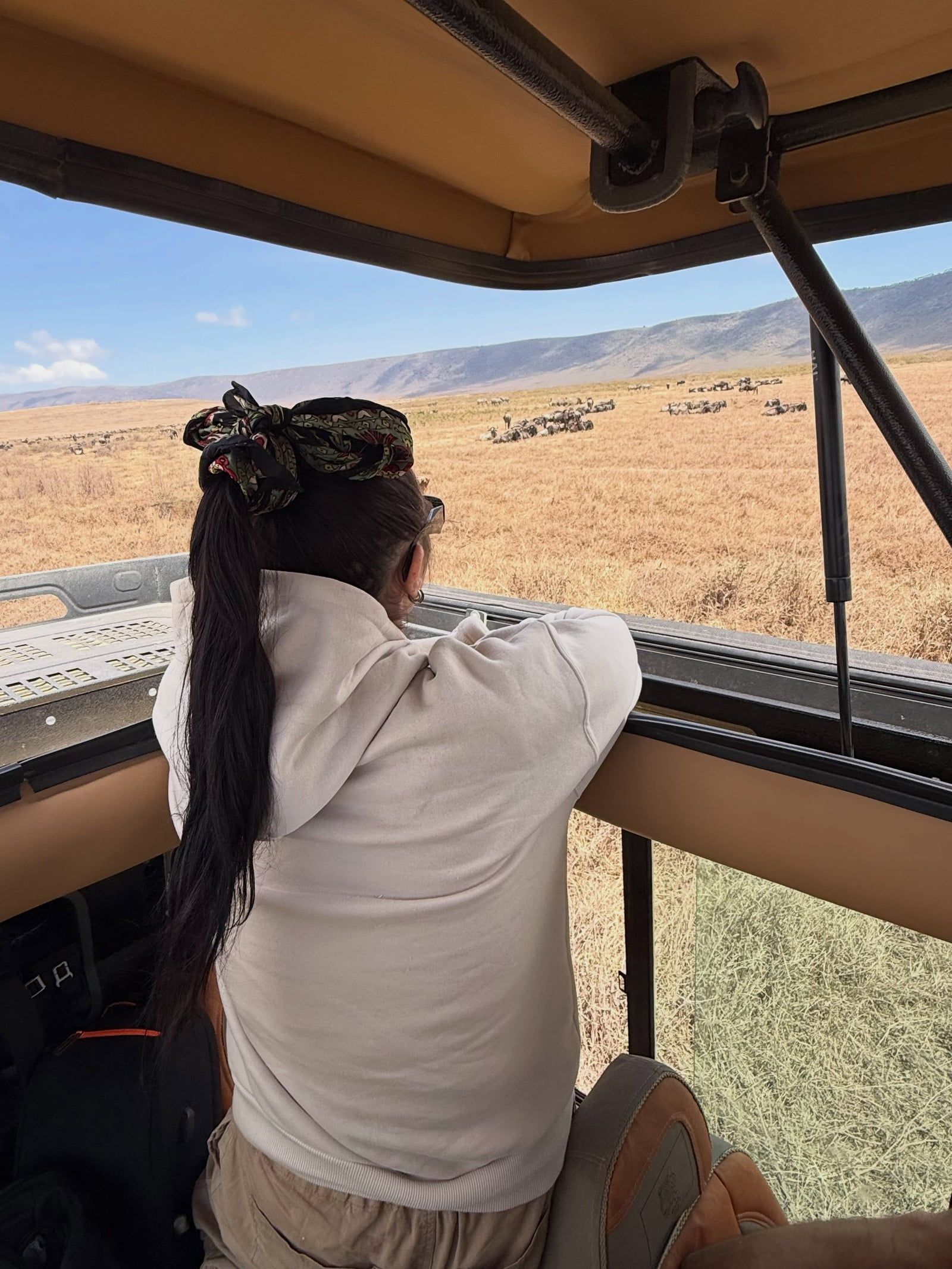
A full-day Etosha safari runs about 10 hours, almost all of it inside the park, working a circuit of waterholes in a 4x4 with a local guide who knows where animals drink. Both tours on this page cost US$137.06 and hunt the same thing: lions, rhino, leopard and elephant crowding the waterholes. Because wildlife here comes to water rather than hiding in thick bush, Etosha is one of Africa's most reliable parks for a single big day out.
Guides track the central waterholes — Gemsbokvlakte, Charitsaub, Goas, Nebrownii — where elephant herds, zebra, giraffe, lion and the world's largest black rhino population gather to drink. Expect long pauses at each hole; sitting still beats racing between them.
One of the tours is led by guides who grew up in the park and track animals daily. Even on the group tour, your English-speaking driver-guide handles the corrugated gravel roads while you scan the plains. You just watch.
The Etosha Pan stretches 130 km — a shimmering salt expanse visible from space and the largest in Africa. Tours stop along its edge, where heat mirages make the dry floor look flooded. Bring sunglasses; the glare is real.
Etosha is the only place on Earth with black-faced impala, around 200 of them relocated from Kunene in the early 1970s. Your guide knows which waterholes and thickets they favor. Springbok, wildebeest and hartebeest need no help finding.
Camp-run drives from Okaukuejo, Halali and Namutoni include night drives — the only legal way to be out after the gates close, when lions and rhino are most active. Blankets come standard on the group 4x4 tour. Dawn is cold even in summer.
If your route ends near Okaukuejo, stay into the evening: the floodlit waterhole draws rhino, elephant and hyena meters from the benches. Many visitors rate one night here among the best game viewing in Africa.
Both tours on this page are 10-hour full-day game drives at US$137.06, but they differ in group size and pickup. Know the details before you commit — Etosha has fees, gate times and booking quirks that catch people out.
Two formats dominate: a guided group tour in a 9-seater 4x4 with a local English-speaking guide, and a private 10-hour drive with guides born in Etosha. Camp-run morning, afternoon and night drives also depart from Okaukuejo, Halali and Namutoni if you're staying inside the park. Guided drives beat self-driving here — someone else handles 3,551 km of corrugated gravel.
Book guided tours at least 48 hours ahead if you're staying at Halali, Namutoni or Mushara — they're far from Andersson Gate and carry a surcharge. For in-park accommodation, NWR camps sell out months ahead for July–November. Don't leave either to chance in high season.
Park entry is paid separately at the gate: NAD 150 per foreign adult per day (until 31 March 2026), then NAD 280 from 1 April 2026. Add NAD 50 per vehicle. NAD is pegged 1:1 to the South African rand, and you'll need your passport or ID at entry — checks are enforced because of poaching.
The group tour picks up from lodges and campsites within about 30 minutes of Andersson Gate; some lodges don't allow operators onto their property, in which case you meet at the gate, where parking is free. Half-day pickups happen at Andersson Gate only. Contact the operator on WhatsApp if your lodge isn't listed.
Night drives with the camps are the only legal way to be outside a vehicle after dark in Etosha, when lions and black rhino are most active. Neighboring Ongava and Onguma private reserves add walking safaris and eye-level waterhole hides. The Himba village tour at Otjikandero, 40 km from Andersson Gate, is the standard cultural add-on.
Game viewing is vehicle-based, so almost no walking is involved — both tours list suitability for all fitness levels. Infants can ride on laps on the private tour. Okaukuejo Camp has two disabled-access rooms with grab-rails and a pull-down shower seat. Camp-run drives don't take children under six.
Both tours on this page allow a full refund if you cancel at least 24 hours before departure. That's generous by safari standards, but it won't cover your NWR camp booking if you cancel late. Check that policy separately when you reserve accommodation.
Swipe to see more
| Guided Group 4x4 Tour | Private Full-Day Tour | Camp-Run Game Drives | Self-Drive Safari | |
|---|---|---|---|---|
| Duration | 10 hours (600 minutes in the park) | 10 hours | Morning, afternoon and night drives (2–4 hours each) | Your own itinerary; 2–5 nights recommended |
| Price from | US$137.06 per person | US$137.06 | Booked via NWR with camp accommodation | Park entry NAD 150/person/day plus NAD 50/vehicle (until March 2026) |
| Group size | Up to 9 passengers in a 4x4 | Private vehicle, your group only | Shared open vehicles from camp | Your own vehicle |
| Best for | Travelers staying near Andersson Gate who want a shared, budget-friendly full day | Families and anyone wanting the full vehicle and guides born in Etosha tracking the big four | Guests staying inside the park — night drives are the only legal after-dark option | Confident drivers with a high-clearance 2WD or 4x4, dry season only for sedans |
| Includes | Driver/guide, 4x4, blankets, hotel pickup within 30 min of Andersson Gate | Private transportation, English-speaking guide, Etosha Pan viewpoint stop | Guide, open vehicle, park entry paid separately at the gate | 3,551 km of signposted gravel roads, 86 waterholes, total freedom |
Swipe to see more
Gates open at sunrise and close at sunset, and the times change weekly — posted at each gate, confirmed at camp reception. Some published examples:
Every vehicle must be inside camp by closing time. Night driving outside camps is prohibited, so plan to be behind the fence about 30 minutes before the posted hour — animals on the road at dusk are a genuine hazard.
Camp rooms are available from 12:00 and must be vacated by 10:00. Tours typically meet at or just after gate opening, when animals are drinking.
Etosha sits about 420–435 km north of Windhoek in northwestern Namibia (not Tanzania — a common mix-up). Hosea Kutako International Airport is 40 km east of Windhoek.
Fill up with fuel at Outjo (southern route) or Tsumeb (eastern route) before entering — gravel roads eat fuel and tyres.
May to October is the best window: seasonal water dries up and animals crowd the remaining waterholes, making sightings predictable. SafariBookings rates July, August and September 'Excellent'. May and June give you good viewing with fewer vehicles.
Expect clear skies and mild days, though October can be hot, and September–October brings hazy, dusty air across the pan.
November to April is the wet season — rated 'Poor' for game viewing January to March as rain scatters wildlife. The trade-off: green landscapes, newborn animals, and flamingos and pelicans at Fischer's Pan as summer migrants push the bird list to 407 species. Birders deliberately come now.
Most visitors stay 2–5 nights. Two nights is the workable minimum; 3–5 lets you cover the central and eastern sections plus the restricted west at Dolomite Camp.
Etosha is one of Africa's most manageable safaris for older travelers and anyone with limited mobility, because you watch wildlife from your vehicle or from benches at camp waterholes. Very little walking is required.
Okaukuejo Camp has two disabled-access rooms near the waterhole, with wide doorways, grab-rails and a pull-down shower seat. Self-driving on the rough, corrugated gravel roads requires assistance or a hand-controlled rental — guided game drives are the easier option.
Children of all ages are welcome and under-16s enter free. They must stay inside the vehicle at all times in the park; inside camps, the waterholes are fenced and safe to watch from. Camp-run game drives don't take children under six.
Six camps sit inside the park, all run by Namibia Wildlife Resorts: Okaukuejo, Halali, Namutoni, Dolomite, Onkoshi and Olifantsrus. Okaukuejo, Halali and Namutoni each have a restaurant, bar, shop, swimming pool and a floodlit waterhole for night viewing.
Accommodation must be booked in advance through NWR — July to November sells out months ahead. Check in at reception on arrival; rooms open at 12:00 and close at 10:00.
Fuel is available at the three main camps, but top up at Outjo or Tsumeb before entering. Free parking exists at Andersson Gate for tour pickups. There's no formal dress code — pack layers, since dawn drives on open vehicles are cold even in summer, and bring binoculars: much of the action plays out at distance across open plains.
Stay in your vehicle at all times except inside rest camps and designated rest areas. Feeding animals, littering and off-road driving are prohibited — off-road violations can mean vehicle impoundment. Silence is required at waterholes.
Speed limit is 60 km/h on park roads; drop to 20–40 km/h where animals are present. Namibia drives on the left. Everyone must show ID (passport, driver's licence or ID card) at entry because of poaching — 46 of Namibia's 61 poached black rhino in 2022 died in Etosha.
Drones are strictly prohibited with no exceptions; declare any drone at the gate and it's held in storage until you leave. Plastic bags are banned nationwide. Pets, firearms and motorcycles are not allowed.
No advance permit is needed — pay entrance fees at the gate and keep the permit, which lists the rules you've agreed to follow.
No. The US$137.06 tour price covers the guide, vehicle and pickup, but park entry is paid separately at the gate: NAD 150 per foreign adult per day plus NAD 50 per vehicle until 31 March 2026, rising to NAD 280 and NAD 60 from 1 April 2026. Bring your passport or ID — checks are enforced at every gate.
The group 4x4 tour picks up from lodges and campsites within about 30 minutes of Andersson Gate. Some lodges don't allow operators onto their property, in which case you meet at the gate, where parking is free. If you're staying at Halali, Namutoni or Mushara, book at least 48 hours ahead — they're far from Andersson Gate and carry a surcharge.
No safari guarantees sightings, but Etosha is about as close as it gets. The private tour's stated goal each day is to find at least one of the big four — lions, rhino, leopard and elephant — and dry-season visits concentrate animals at predictable waterholes like Gemsbokvlakte, Goas and Nebrownii. Etosha also holds the world's largest black rhino population, best seen after dark at the floodlit camp waterholes.
Both tours on this page run a full 10 hours, with about 600 minutes of that inside the park, stopping at waterholes and viewpoints. Camp-run drives are shorter — two to four hours for morning, afternoon or night sessions. Most visitors combine a full-day tour with two to five nights in the area.
Yes on the private tour — infants can ride on an adult's lap, and children under 16 enter the park free. The group tour is suitable for all fitness levels but isn't recommended for pregnant travelers. Camp-run game drives won't take children under six. Kids must stay inside the vehicle at all times in the park.
Both tours on this page offer a full refund if you cancel at least 24 hours before departure. That covers the tour only — NWR camp accommodation inside the park has its own booking terms and sells out months ahead for July–November, so check that policy separately.
Layers, without question. Dawn on an open vehicle is genuinely cold even in summer — the group tour hands out blankets, but bring a fleece, beanie and windproof layer anyway. Neutral earth tones beat bright colors, and a wide-brimmed hat and sunscreen matter once the sun climbs. Sturdy closed shoes are fine; no hiking is required.
No — drones are strictly prohibited throughout the park, with no exceptions for private use. Any drone must be declared at the gate, where it's held in storage until you leave. Photography from your vehicle is unrestricted, and the floodlit waterholes at Okaukuejo, Halali and Namutoni are world-class for night shots instead.
Risk is low, especially May–October, but slight risk exists near the pan margins during the wet months of November–April. Consult a travel-health specialist about prophylaxis, and regardless of season use repellent and long sleeves at dawn and dusk — which conveniently is also what you'd wear on a cold morning drive.
No — it's in northwestern Namibia, about 420–435 km north of the capital Windhoek, spanning the Kunene, Oshana, Oshikoto and Otjozondjupa regions. Tanzania's flagship parks are the Serengeti, Ngorongoro Crater and Tarangire. The mix-up is common enough that it's worth confirming your flight lands in Windhoek, not Arusha.
Browse verified tours with free cancellation and instant confirmation.
Find Tours


A full-day (10-hour) game drive through Etosha in a 9-seater 4x4, led by an English-speaking local guide who knows the terrain. The whole day runs inside the park — 600 minutes of driving with stops at waterholes and viewpoints along the way. Pickup works from lodges and campsites within about 30 minutes of Anderson Gate, so you can leave your own vehicle at your accommodation. Not every lodge allows the driver onto the property; if yours doesn't, you meet at Anderson Gate, where there's free parking. Half-day versions, if offered, pick up only at the gate. Included: the driver-guide, the 4x4, and blankets for cold early-morning starts. Cancel at least 24 hours before departure for a full refund.
For a full refund, cancel at least 24 hours before the scheduled departure time.
English


This is a 10-hour private game drive run by guides who were born in Etosha and know where the animals gather. The goal each day is specific: find at least one of the big four — lions, rhinos, leopards and elephants — at the waterholes and hotspots the guides track. One scheduled stop is the Etosha pan itself, the great white salt flat, for about 10 minutes. Transport is private, in vehicles built for the park's gravel roads. Every vehicle is insured and fully serviced, and each carries a first aid kit and a fire extinguisher. On cold mornings the guides hand out mini blankets — Etosha dawns can be genuinely cold, especially in winter. Guiding is in English only. Cancel at least 24 hours before departure for a full refund.
For a full refund, cancel at least 24 hours before the scheduled departure time.
English